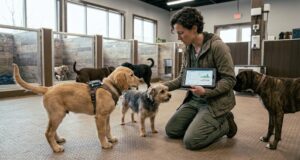
A dog finishes its boarding stay, leaves the facility with its owner, and is replaced by another animal within a few hours. The kennel is cleaned, the bedding is changed, and the water bowl is refilled. Everything appears ready for the next arrival. Yet an important question remains: has the space actually been made safe, or has visible dirt simply been removed?
This distinction is central to infection prevention in Dog Boarding facilities. Dogs share environments in ways that create numerous opportunities for microorganisms to move between animals. A contaminated food bowl, inadequately washed blanket, employee’s hands, cleaning brush, or transport crate can become part of a transmission chain. Some pathogens spread through direct contact, while others can survive on surfaces or enter the environment through feces, urine, saliva, respiratory secretions, and other biological material.
Preventing cross-contamination requires more than keeping kennels visually clean. It requires a coordinated infection-control system that defines how animals move, how staff work, which equipment can be shared, how laundry is handled, and what happens when a dog becomes ill.
This manual examines the practical principles behind professional kennel hygiene and explains how boarding operators can build procedures that protect both animal health and facility operations.
Understanding Cross-Contamination in Dog Boarding
Cross-contamination occurs when infectious material moves from one animal, object, or area to another. It may happen without direct contact between dogs.
For example, an infected dog may contaminate a kennel floor through fecal material. An employee cleans the area using a brush, places the brush in a shared storage location, and later uses it in another kennel. If the equipment has not been properly cleaned and disinfected, infectious material may be transferred.
This type of transmission is sometimes called indirect or fomite transmission. A fomite is an object or surface capable of carrying infectious material.
Common sources of cross-contamination in Dog Boarding environments include:
- Kennel floors, walls, gates, and door handles
- Food and water bowls
- Shared toys and exercise equipment
- Bedding, towels, and blankets
- Leads, collars, harnesses, and grooming tools
- Cleaning brushes, buckets, and mops
- Staff hands, footwear, and clothing
- Transport crates and vehicles
- Outdoor exercise areas
The risk depends on the pathogen involved. Canine parvovirus, for example, is particularly resistant in the environment, while other organisms may be more easily controlled through routine cleaning and appropriate disinfection.
A facility should therefore avoid treating every infectious risk as identical. Its procedures must account for the different ways pathogens survive and spread.
Cleaning Versus Disinfection: Two Different Responsibilities
One of the most common weaknesses in kennel sanitation is confusing cleaning with disinfection.
Both processes are necessary, but they serve different purposes.
What cleaning actually accomplishes
Cleaning removes visible dirt, organic material, grease, feces, urine, food residue, and other contamination from surfaces.
This is important because organic material can reduce the effectiveness of disinfectants. A disinfectant applied over a dirty kennel floor may not reach microorganisms hidden beneath biological material.
A proper cleaning process generally involves:
- Removing dogs, food bowls, bedding, and loose equipment.
- Removing feces, hair, food debris, and other visible waste.
- Applying an appropriate detergent or cleaning solution.
- Scrubbing surfaces where necessary.
- Rinsing when required by the product instructions.
- Allowing the area to proceed to the disinfection stage.
Cleaning reduces contamination, but it does not necessarily kill infectious organisms.
What disinfection accomplishes
Disinfection uses an appropriate chemical or physical process to inactivate microorganisms on suitable surfaces.
A boarding facility should select products based on the pathogens it needs to control, the materials being treated, and the manufacturer’s instructions.
Different disinfectants have different activity ranges. A product effective against ordinary bacteria may not be effective against resistant viruses such as canine parvovirus.
Important considerations include:
- Whether the product is labeled for the intended pathogen
- Correct dilution and preparation
- Required surface contact time
- Surface compatibility
- Temperature and environmental conditions
- Whether rinsing is required
- Safe drying or re-entry conditions before dogs return
A frequent operational mistake is spraying a disinfectant and wiping it away immediately. If the product requires several minutes of wet contact, removing it too soon may prevent effective disinfection.
Why facilities should document both processes
Staff should not simply record that a kennel was “cleaned.” Their records should distinguish between cleaning and disinfection.
A useful sanitation log identifies the area, date, time, product used, dilution where applicable, and the employee responsible.
This creates accountability and helps management identify repeated failures, missed procedures, or products that are not suitable for the facility’s infectious disease risks.
Equipment Separation: Preventing Infection Through Shared Supplies
Shared equipment is convenient, but uncontrolled sharing can undermine even a well-designed cleaning program.
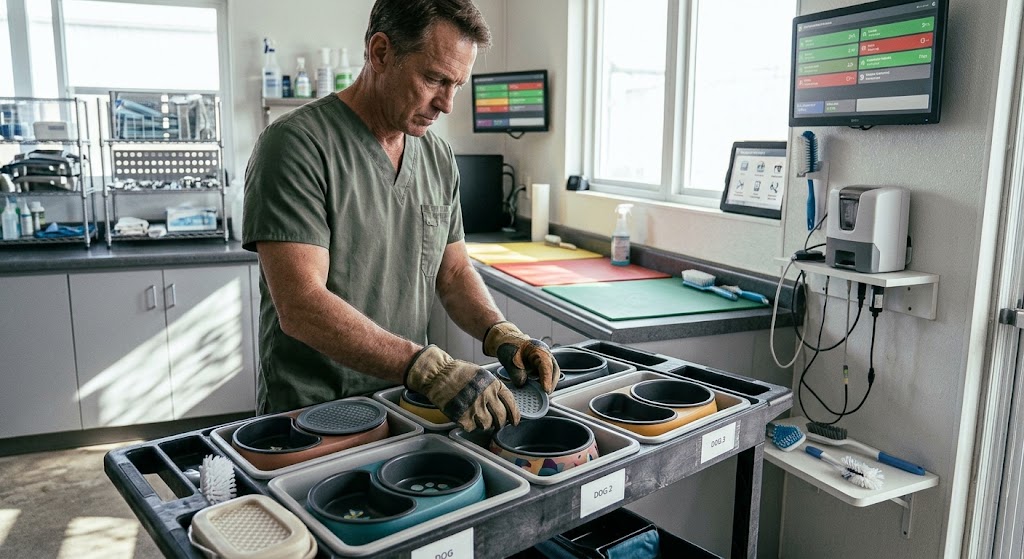
A food bowl used by one dog should not automatically be given to another dog without appropriate washing and sanitation. Similarly, brushes, toys, leads, grooming tools, and cleaning equipment may transfer infectious material.
Establish equipment zones
Professional Dog Boarding facilities should organize equipment according to its intended use.
A practical system may include:
- Individual equipment assigned to each dog
- General-use equipment that is cleaned between animals
- Dedicated equipment for isolation areas
- Separate cleaning tools for different facility zones
- Clearly marked containers for contaminated or used items
Color coding can help staff recognize equipment categories quickly. For example, isolation-area cleaning tools may have a distinct color from those used in ordinary boarding areas.
The specific colors are less important than maintaining a consistent system that every employee understands.
Food and water bowls
Bowls should be washed between dogs using an appropriate cleaning process. Where necessary, they should also undergo a suitable sanitizing procedure.
Water bowls deserve particular attention because they may remain in use throughout the day. Staff should inspect them regularly for saliva, food particles, debris, and visible contamination.
Dogs should not drink from a common communal container simply because it is easier to refill. Individual or appropriately managed drinking arrangements reduce unnecessary sharing.
Toys and enrichment equipment
Toys are often overlooked because they are viewed as recreational objects rather than potential contamination sources.
However, dogs carry toys in their mouths, chew them, drool on them, and sometimes exchange them during play.
Toys should be selected according to their cleanability. Damaged objects with cracks, deep scratches, or porous surfaces may be difficult to sanitize properly.
Facilities should establish a routine for removing, cleaning, disinfecting when appropriate, and drying reusable toys. Items that cannot be safely processed should not be shared between dogs.
Staff Hygiene: Controlling the Human Side of Infection Transmission
Employees can unintentionally move infectious material between dogs even when they follow good intentions and handle animals gently.
A worker may clean a kennel, collect laundry, handle a coughing dog, prepare meals, and then assist another animal. Without clear hygiene procedures, the movement between these tasks can create opportunities for contamination.
Hand hygiene between animal groups
Handwashing is one of the most important infection-control practices.
Staff should clean their hands:
- Before preparing food
- After handling an individual dog when contamination is possible
- After cleaning kennels
- After handling feces, urine, vomit, or soiled bedding
- After working in an isolation area
- Before moving from a higher-risk area to a clean area
Gloves can provide an additional barrier when handling contaminated material, but they do not replace hand hygiene. Gloves should be changed between tasks when contamination is possible.
Clothing and footwear management
Employees should avoid carrying contamination from one section to another on shoes or clothing.
Facilities may use dedicated footwear, protective clothing, or designated changing areas for isolation and high-risk sections.
Footwear cleaning procedures should be appropriate for the pathogens involved. Simply wiping shoes with a damp cloth is not a reliable substitute for an established disinfection process.
Protective clothing should be removed and handled carefully after working in contaminated areas. It should not be worn throughout the facility without appropriate controls.
Staff movement should follow a defined order
Where staffing allows, employees should care for healthy dogs before attending to sick or isolated animals.
This reduces the possibility of transferring infectious material from a higher-risk environment into clean boarding areas.
If an employee must move back into a healthy-dog section after handling an isolated animal, the facility should require the appropriate clothing changes, hand hygiene, and equipment controls.
A written staff movement policy is more reliable than expecting every employee to remember informal instructions during a busy shift.
Laundry Management: An Often-Overlooked Infection-Control Risk
Blankets, towels, bedding, washable toys, and cleaning cloths can collect biological material. If contaminated laundry is handled carelessly, infectious material may spread to employees, storage areas, washing equipment, and clean bedding.
Separate clean and contaminated laundry
A facility should establish two clearly identified laundry streams:
Used laundry: Items removed from kennels, including bedding exposed to saliva, feces, urine, vomit, or other secretions.
Clean laundry: Items that have completed the approved washing and drying process and are ready for storage or use.
These categories should never be mixed.
Soiled bedding should be placed directly into designated laundry containers. Staff should avoid shaking blankets because this can disperse dust, hair, and potentially contaminated particles into the surrounding environment.
Use appropriate washing procedures
Laundry procedures should consider the fabric, type of contamination, washing temperature, detergent, and drying method.
Where the material allows, appropriate hot-water washing and thorough machine drying can improve hygiene. However, no single washing temperature should be assumed to destroy every pathogen in every situation.
Heavily contaminated materials may require additional treatment or disposal, depending on the suspected organism and the facility’s veterinary infection-control plan.
Keep clean laundry protected
Once bedding has been washed and dried, it should be stored in a clean, dry, protected area.
Clean blankets should not be placed on the same trolley used to collect contaminated laundry unless the trolley has been properly cleaned and disinfected.
Laundry rooms should also have a logical workflow so that dirty items do not pass through clean storage areas.
Isolation Areas: Separating Sick Dogs From Healthy Animals
Every professional Dog Boarding facility should have a clear procedure for managing dogs that develop signs of infectious illness.
Isolation is not punishment or abandonment. It is a protective measure intended to reduce exposure while ensuring the affected animal receives appropriate care.
Recognizing when isolation may be necessary
Symptoms that may require immediate assessment and separation include:
- Persistent coughing or sneezing
- Vomiting or diarrhea
- Unexplained fever
- Unusual lethargy
- Nasal or eye discharge
- Skin lesions that may be infectious
- Sudden changes in appetite accompanied by other illness signs
These symptoms do not establish a diagnosis. A veterinarian must determine the likely cause and appropriate treatment.
However, staff should not wait for a confirmed laboratory diagnosis before taking reasonable precautions when a contagious disease is suspected.
What an effective isolation area requires
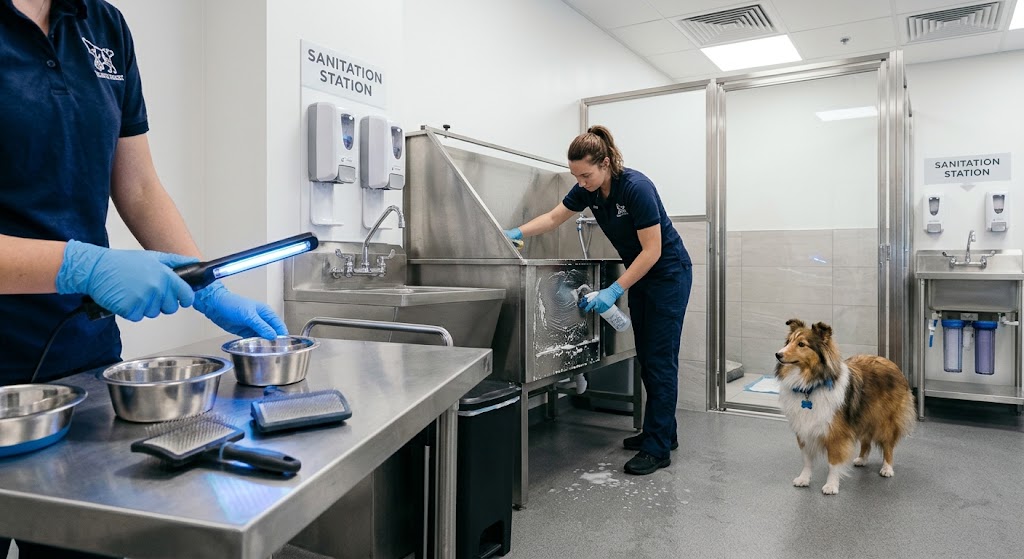
An isolation area should be physically separated from normal boarding activities as far as reasonably possible.
It should have:
- Dedicated food and water bowls
- Separate bedding and handling equipment
- Appropriate ventilation
- Controlled staff access
- Suitable waste disposal arrangements
- Cleaning tools reserved for the area
- A safe method of moving dogs without exposing others
The layout should also support the dog’s welfare. Isolation should not mean leaving an animal in an uncomfortable, frightening, or inadequately supervised space.
Dogs still need appropriate feeding, hydration, toileting, observation, and veterinary attention.
When should an isolated dog return to general boarding?
The answer depends on the suspected or confirmed disease.
Different pathogens have different shedding periods and transmission characteristics. A dog may appear clinically improved while still presenting an infection risk.
Facilities should follow veterinary advice and any applicable public-health or animal-health requirements rather than relying on a universal isolation period.
Environmental Hygiene: Kennels, Corridors, and Outdoor Areas
Cross-contamination does not stop at the kennel door. Dogs and staff move through corridors, reception areas, grooming spaces, food-preparation sections, and exercise yards.
A facility should treat the entire premises as an interconnected environment.
Indoor kennel sanitation
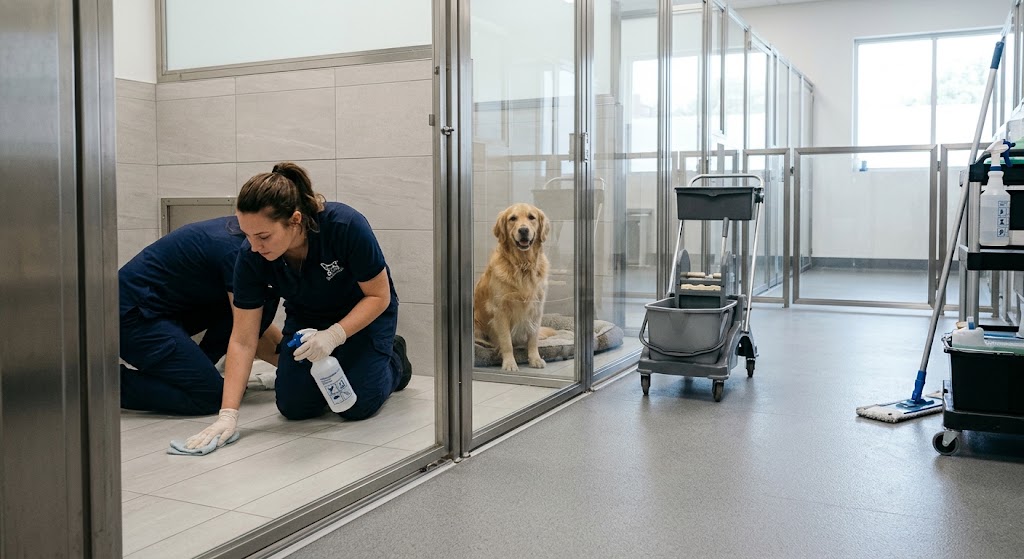
Floors, walls, kennel gates, door handles, drainage points, and frequently touched surfaces should be included in cleaning schedules.
Cracks and damaged flooring deserve attention because organic material can accumulate in areas that are difficult to clean.
Maintenance is therefore part of infection control. Damaged surfaces should be repaired or replaced when they prevent effective sanitation.
Ventilation and air quality
Respiratory infections can spread through close contact and infectious respiratory particles. Good ventilation helps manage indoor air quality and reduces the accumulation of airborne contaminants.
Facilities should avoid relying solely on air fresheners or scented cleaning products to create the impression of freshness. A pleasant smell does not demonstrate that the air is safe or that infectious material has been removed.
Ventilation should be appropriate for the building design, animal population, and local climate.
Outdoor exercise areas
Outdoor yards require a separate hygiene strategy.
Feces should be removed promptly, and shared equipment should be cleaned between uses when necessary. Water stations, gates, artificial turf, and other frequently used surfaces should be inspected regularly.
Soil and grass cannot be disinfected as reliably as suitable hard surfaces. If an infectious disease such as parvovirus is suspected, the facility may need to close the affected area and seek veterinary guidance about future use.
Daily Monitoring Procedures and Infection-Control Records
A strong sanitation system can still fail if staff do not recognize illness early.
Daily health monitoring allows facilities to identify unusual changes before a suspected infection spreads further.
Admission health screening
Before accepting a dog, staff should review:
- Vaccination documentation
- Recent illness or veterinary treatment
- Current medication
- Appetite and normal eating habits
- Vomiting or diarrhea history
- Coughing, sneezing, or nasal discharge
- Known contact with infectious animals
- Existing skin conditions or open wounds
Owners should be encouraged to provide accurate information rather than simply completing a form without discussion.
Daily observation during boarding
Employees should observe each dog at least as part of the facility’s routine daily care.
Important observations include:
- Appetite and water consumption
- Stool consistency
- Urination patterns
- Energy and activity
- Coughing or sneezing
- Vomiting
- Skin condition
- Unusual behavior or discomfort
Staff should record changes rather than relying on memory.
A dog that refuses one meal may simply be adjusting to a new environment. However, refusal to eat accompanied by vomiting, diarrhea, or marked lethargy requires a more serious response.
Incident reporting and exposure tracking
If a dog develops a suspected infectious illness, management should document:
- When symptoms were first observed
- Which areas the dog occupied
- Which dogs may have been exposed
- Which employees handled the animal
- Equipment used during care
- Cleaning and disinfection actions
- Veterinary recommendations
- Owner communication
These records help the facility identify possible transmission routes and make informed decisions about additional precautions.
Staff Training and Management Accountability
Infection control should never depend on one experienced employee remembering every procedure.
New employees need practical training before they independently clean kennels, prepare meals, handle laundry, or care for isolated animals.
Training should include demonstrations of:
- Correct cleaning and disinfection sequences.
- Product dilution and contact-time requirements.
- Handwashing and glove-changing procedures.
- Handling and disposal of contaminated waste.
- Separation of clean and used equipment.
- Laundry collection and storage.
- Recognition of possible infectious symptoms.
- Reporting and escalation procedures.
Managers should periodically observe staff performing these tasks. A written policy has little value if employees cannot apply it correctly during a busy shift.
Management must also provide sufficient supplies, appropriate storage, functioning washing equipment, and realistic staffing levels. Infection-control failures often arise not because employees do not care, but because the operational system makes correct procedures difficult to follow.
A Practical Cross-Contamination Prevention Checklist
The following checklist can help Dog Boarding operators review their everyday infection-control arrangements.
| Control area | Essential procedure |
|---|---|
| Admission | Verify vaccination records and assess signs of illness |
| Kennel cleaning | Remove organic material before disinfection |
| Disinfectants | Use suitable products at the correct concentration and contact time |
| Bowls and toys | Clean and process between dogs as appropriate |
| Equipment | Separate individual, general-use, and isolation supplies |
| Staff hygiene | Maintain handwashing and protective clothing procedures |
| Laundry | Keep used and clean bedding completely separate |
| Isolation | Separate suspected infectious cases and seek veterinary guidance |
| Outdoor areas | Remove waste promptly and manage contaminated zones |
| Monitoring | Record daily health observations |
| Training | Teach staff practical infection-control procedures |
| Documentation | Maintain sanitation, exposure, and incident records |
Facilities should review this checklist regularly and revise their procedures when veterinary advice, products, building conditions, or the types of dogs being accommodated change.
Making Infection Control Part of Responsible Dog Boarding
Cross-contamination prevention is not achieved through one disinfectant, one cleaning schedule, or one employee’s attention to detail. It depends on how the entire Dog Boarding facility operates.
A contaminated blanket can undermine clean kennel floors. Poor staff hygiene can undo careful equipment separation. An overlooked symptom can expose multiple dogs before management understands that an infectious problem exists.
The most reliable facilities recognize these connections and design their procedures accordingly. They separate clean and contaminated workflows, train employees to follow consistent routines, monitor every dog, and respond quickly when illness appears.
For dog owners, these practices are worth discussing before choosing a boarding provider. A facility should be able to explain how it cleans, disinfects, handles laundry, separates equipment, and manages sick animals.
For operators, the goal is not simply to make a kennel look clean between arrivals. It is to create an environment in which infectious material has fewer opportunities to move from one dog to another. That is the foundation of professional hygiene, responsible animal care, and safer Dog Boarding.