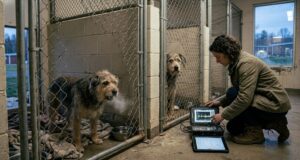
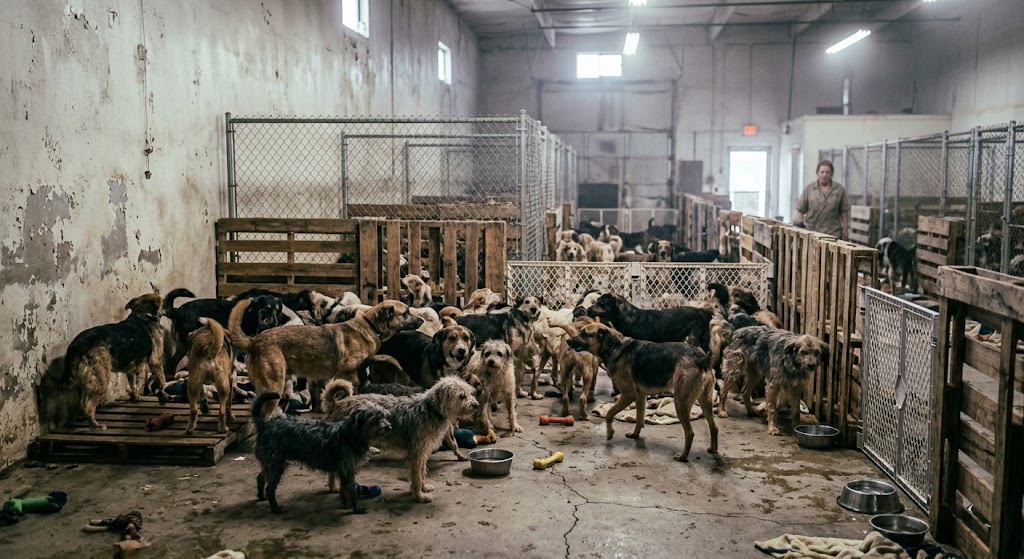
A Dog Boarding facility can appear clean, organized, and professionally managed while still operating beyond a safe capacity. Fresh bedding, disinfected floors, scheduled meals, and friendly staff may create a reassuring first impression, but these visible features do not necessarily reveal how much pressure the environment places on the dogs living inside it.
Overcrowding is not simply a matter of having too many kennels occupied. It is a wider operational and animal-welfare problem. The number of dogs must be considered alongside available space, staffing levels, ventilation, sanitation, exercise areas, sleeping arrangements, feeding systems, and emergency procedures. A facility may have enough physical kennels for its registered capacity but lack the resources to supervise, exercise, separate, and care for every dog appropriately.
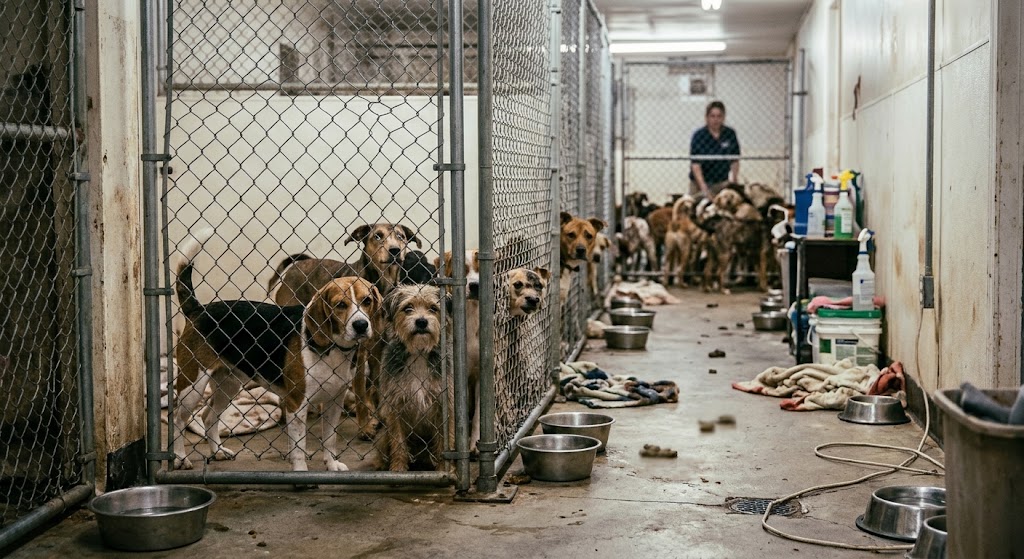
The consequences can develop gradually. A dog may become less willing to approach other dogs, sleep poorly because of continuous barking, develop gastrointestinal symptoms, or experience repeated competition over food and resting areas. Staff may struggle to recognize early warning signs because several animals need attention simultaneously.
This risk-assessment report examines the less obvious dangers of overcrowded Dog Boarding environments, explains why they occur, and explores how responsible facilities determine whether their operating capacity genuinely supports canine welfare.
Understanding Overcrowding: Why Kennel Numbers Do Not Tell the Whole Story
A facility’s advertised capacity is not necessarily a reliable measure of its ability to provide appropriate care.
For example, a boarding center may contain 40 individual kennels. However, its effective capacity depends on whether it has enough employees, suitable exercise areas, isolation accommodation, ventilation, cleaning time, and sleeping space to manage 40 dogs safely.
The distinction between physical capacity and operational capacity is essential.
Physical capacity refers to the number of dogs that can technically be accommodated within the building.
Operational capacity refers to the number of dogs the facility can manage while maintaining appropriate supervision, hygiene, exercise, feeding, rest, and emergency readiness.
Welfare capacity considers whether the environment allows individual dogs to maintain reasonable physical comfort, emotional stability, social choice, and opportunities to avoid unwanted interactions.
These figures may be very different.
A facility might safely manage 30 dogs under normal conditions but become overwhelmed when several dogs require medication, a few develop respiratory symptoms, and others need individual behavioral management.
Capacity should therefore be treated as a dynamic safety limit rather than a permanent number printed on a license or displayed on a website.
Disease Transmission: How High Dog Density Increases Health Risks
One of the most serious hidden risks of overcrowded Dog Boarding facilities is the increased opportunity for infectious diseases to spread.
Dogs arriving from different households bring different vaccination histories, exposure experiences, and health conditions. Some may carry infectious organisms before showing obvious symptoms. Others may be recovering from recent illnesses or may have an infection during its early incubation period.
When many dogs share an environment, the number of possible exposure pathways increases.
Respiratory infections and close-contact exposure
Canine infectious respiratory disease complex, commonly associated with kennel cough, includes several infectious agents that can cause coughing, sneezing, nasal discharge, and other respiratory signs.
Transmission can occur through respiratory droplets, close contact, and contaminated objects or surfaces, depending on the pathogen involved.
An overcrowded environment can make prevention more difficult because:
- Dogs may spend more time in close proximity.
- Shared exercise areas create repeated opportunities for contact.
- Continuous movement makes it harder to identify individual exposure histories.
- Staff may have less time to monitor early symptoms.
- Cleaning and disinfection routines may become rushed.
- Dogs may be transferred between areas without adequate separation.
Not every coughing dog has the same infection, and respiratory symptoms can have noninfectious causes. Nevertheless, unexplained coughing in a boarding environment should never be dismissed as ordinary adjustment behavior.
Gastrointestinal infections and contaminated environments
Parasites and gastrointestinal pathogens may spread through contaminated feces, soil, water, food bowls, or inadequately cleaned surfaces.
The risk becomes harder to control when dogs use shared elimination areas and staff cannot clean them promptly.
A dog with diarrhea may contaminate a walkway or exercise area. If another dog investigates the contaminated material, exposure may occur. Some parasites and pathogens can also survive in the environment, making cleaning procedures particularly important.
The problem is not necessarily that a facility houses many dogs. It is that a high number of animals can create a workload that exceeds the cleaning system’s practical limits.
Isolation capacity is part of infection control
Responsible Dog Boarding operators should have a realistic procedure for separating dogs that develop signs of illness.
This requires more than temporarily placing a sick dog in an empty kennel. The facility needs appropriate separation, dedicated equipment where necessary, hand hygiene, cleaning protocols, and a clear plan for contacting the owner and arranging veterinary assessment.
A facility with no practical isolation arrangement may find itself making difficult decisions after an outbreak has already begun.
Resource Competition: The Behavioral Cost of Too Many Dogs
Overcrowding also changes how dogs interact with their surroundings.
Dogs do not automatically become comfortable simply because they are housed near other animals. Some enjoy social interaction, while others prefer distance, predictable routines, and opportunities to rest without interruption.
When resources are limited, competition can develop around food, water, sleeping areas, toys, human attention, and access to outdoor spaces.
Food and water competition
Feeding several dogs in a crowded room can create unnecessary pressure.
A confident dog may approach another dog’s bowl, while a more cautious animal may stop eating rather than risk confrontation. Dogs that eat quickly may finish their food and attempt to access neighboring bowls.
This creates problems beyond the immediate possibility of fighting.
A dog that repeatedly avoids meals may experience inadequate nutritional intake. A dog that eats too quickly may develop digestive discomfort. Staff may also struggle to identify how much each individual animal has actually consumed.
Individual feeding arrangements, physical separation where necessary, and accurate meal records help prevent these problems.
Water availability deserves equal attention. Dogs should have reliable access to clean drinking water without having to compete with other animals or wait for staff to refill shared containers.
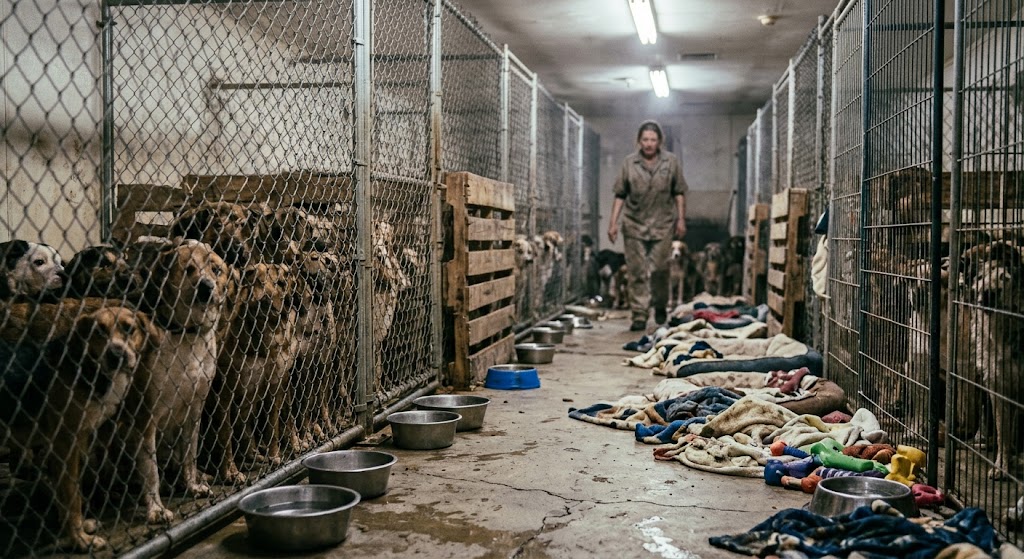
Competition over resting places
A comfortable resting area is a basic welfare requirement.
If several dogs share a limited space, some may repeatedly occupy the most comfortable sleeping locations. Others may be forced to rest near doors, noisy walkways, or areas where dogs frequently pass.
This can create tension even when no obvious aggression occurs.
A dog that cannot comfortably withdraw from social contact may spend much of the day monitoring nearby animals rather than sleeping.
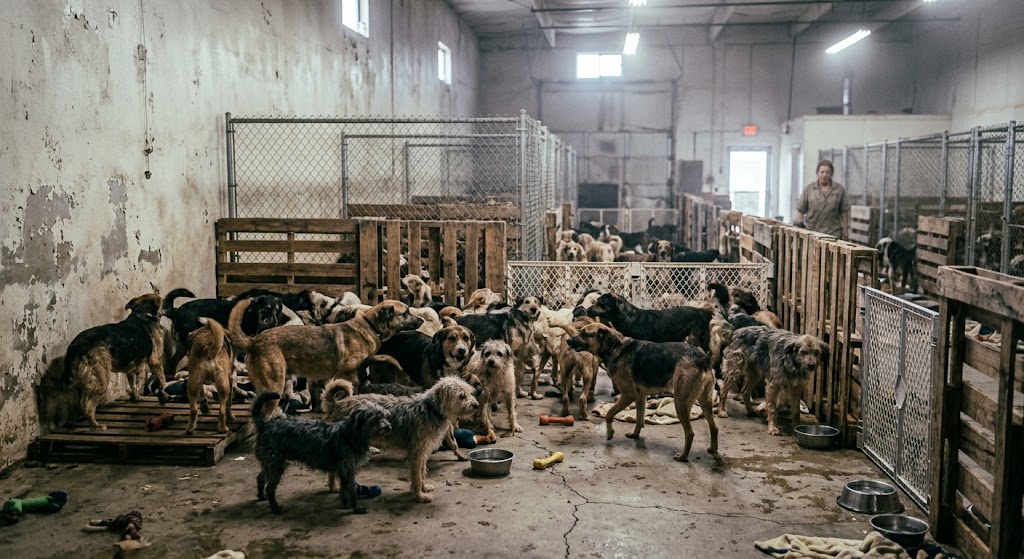
Human attention becomes another limited resource
Dogs depend on staff for more than feeding and cleaning. They may need reassurance, medication, grooming assistance, individual observation, and help managing unfamiliar situations.
When staffing is insufficient for the number of dogs, human interaction often becomes reactive. Employees respond to barking, fights, accidents, and visible distress, leaving less time for quiet individual attention.
This is particularly concerning for elderly dogs, puppies, dogs with disabilities, and animals that need additional behavioral support.
Noise Pollution: The Overlooked Effect of Continuous Barking
Noise is one of the least appreciated environmental risks in Dog Boarding facilities.
A kennel may be physically clean and spacious but still expose dogs to prolonged periods of barking, whining, door movement, equipment noise, and human activity.
The acoustic environment matters because dogs have highly developed hearing and may respond to sounds that people consider ordinary background noise.
How noise affects canine behavior
Repeated or unpredictable noise can contribute to heightened alertness and difficulty settling.
A dog may react to another animal barking several kennels away. That reaction can trigger further barking, creating a cycle in which one distressed animal increases the arousal of others.
Over time, the environment may become difficult for sensitive dogs to tolerate.
Possible signs include:
- Persistent barking or whining.
- Pacing and repeated movement.
- Difficulty settling after exercise.
- Increased startle responses.
- Reduced interest in food.
- Avoidance of particular areas.
- Irritability during handling or social interaction.
These behaviors do not prove that noise is the sole cause. Pain, separation-related distress, unfamiliar surroundings, and inadequate exercise can produce similar signs. A proper assessment considers the entire environment.
Noise and the ability to recover
Dogs need opportunities for uninterrupted rest. If barking continues throughout the day and night, animals may struggle to achieve sufficient quiet recovery periods.
The result can be a cycle of poor rest, increased irritability, and greater reactivity.
Responsible facilities should consider acoustic separation, suitable kennel construction, quiet sleeping areas, and the placement of dogs according to their individual needs.
Simply telling staff to keep dogs quiet does not address the environmental causes of excessive noise.
Insufficient Rest: When a Busy Facility Prevents Recovery
A boarding environment should provide more than opportunities to remain physically active. Dogs also need adequate time to sleep and relax.
Overcrowded facilities may unintentionally create schedules that prioritize movement and supervision convenience over individual rest requirements.
Dogs may be taken outside in large groups, returned to noisy communal areas, moved between kennels, or disturbed repeatedly by cleaning and feeding activities.
These interruptions can be especially challenging for animals that need predictable routines.
Why rest is more than inactivity
Sleep and quiet rest support normal physiological and behavioral functioning. They contribute to learning, recovery, and the regulation of emotional responses.
A dog that repeatedly misses opportunities to rest may become more reactive or less tolerant of ordinary interactions.
For example, a dog that initially accepts another animal approaching its resting area may begin growling after several days of interrupted sleep.
The growling should not automatically be interpreted as a sudden temperament problem. It may be a warning that the dog is struggling to cope with the environment.
Which dogs are particularly vulnerable?
Some dogs require closer attention to rest and recovery:
- Senior dogs that tire more easily.
- Puppies with substantial sleep requirements.
- Dogs recovering from surgery or illness.
- Animals with chronic pain or mobility limitations.
- Nervous dogs that need additional time to settle.
- Dogs that are unfamiliar with group environments.
A responsible facility should not assume that every dog can follow the same activity schedule.
Quiet accommodation, individual sleeping arrangements, and opportunities to withdraw from social interaction can reduce unnecessary stress.
Supervision Limitations: The Risk of Staff Being Spread Too Thin
Staffing is one of the most important factors in determining whether a Dog Boarding facility can safely accommodate its residents.
The problem with overcrowding is not simply that employees have more work. It is that several important tasks may demand attention at the same time.
One employee might be administering medication while another dog develops diarrhea. A separate group may need outdoor supervision, while a dog in another area begins showing signs of conflict.
If staffing levels are inadequate, employees may be forced to prioritize immediate emergencies over routine observation.
Early warning signs can be missed
Many welfare problems begin with subtle changes.
A dog may gradually stop playing, begin avoiding food, spend more time hiding, or show increasing discomfort around another animal.
These changes are easier to recognize when staff know each dog’s normal behavior and have time to observe them.
In a crowded environment, employees may focus primarily on visible problems such as barking, accidents, or aggressive incidents.
This creates a serious monitoring gap: the facility may respond when a problem becomes obvious but fail to recognize the conditions that allowed it to develop.
Supervision during group activities
Group exercise is another area where overcrowding can increase risk.
A large number of dogs in one play area does not necessarily mean that they are receiving better social enrichment.
Dogs differ in size, age, play style, physical ability, and tolerance for interaction. A dog that enjoys chasing games may overwhelm another that prefers calm movement.
Even dogs that have previously played well together can behave differently when tired, frustrated, or competing for space.
Responsible supervision requires appropriate group selection, manageable numbers, active observation, and the ability to separate animals before tension develops.
Employees should also understand canine body language, including avoidance, freezing, repeated lip licking, stiff posture, resource guarding, and escalating arousal.
Emergency Evacuation: The Capacity Problem That Appears During a Crisis
A facility may appear adequately organized during ordinary operations but become dangerously difficult to manage during an emergency.
Fire, flooding, structural damage, electrical failure, extreme temperatures, and other emergencies can require rapid evacuation or relocation.
Overcrowding increases the complexity of these situations.
Why evacuation becomes harder
Every additional dog creates another individual handling requirement.
Some animals may enter transport crates willingly, while others may resist handling. Large dogs may need different equipment from small dogs. Dogs with mobility problems may require assistance, and animals that are frightened may attempt to escape.
Staff must also consider:
- Whether enough employees are available to handle the dogs.
- Whether suitable leads, carriers, and transport crates are accessible.
- Whether emergency exits remain unobstructed.
- Whether animals can be moved without passing through dangerous areas.
- Whether medical records and medication information can be accessed.
- Whether there is a safe alternative location.
- Whether owners can be contacted promptly.
A facility that can move five dogs easily may struggle to evacuate 35 dogs under the same conditions.
Individual identification and emergency records
Every dog should be identifiable, and the facility should maintain accessible information about emergency contacts, medical requirements, handling restrictions, and relevant behavioral concerns.
A frightened dog may behave differently during an evacuation than it does during ordinary boarding.
Staff need to know which dogs may panic, which require special handling, and which have medical conditions that could complicate transport.
Emergency planning should be based on realistic scenarios, not the assumption that all dogs will calmly follow employees.
Evacuation capacity must be tested
Responsible operators should periodically review evacuation routes, staff responsibilities, equipment availability, and alternative accommodation.
A written plan is useful, but practical preparation is essential.
If a facility cannot explain how it would safely evacuate its maximum number of dogs during a staff shortage or blocked exit, its capacity may be higher than its emergency arrangements can support.
Hidden Operational Problems That Encourage Overcrowding
Overcrowding is not always caused by poor intentions. Business pressures can contribute to decisions that gradually weaken animal care.
Facilities may increase bookings during holidays, accept additional dogs after cancellations, or continue operating at full capacity despite employee absences.
These decisions can create a mismatch between the number of animals and the resources available on a particular day.
Seasonal demand and temporary capacity increases
Holiday periods can place unusual pressure on boarding services.
A facility that normally operates comfortably may accept more bookings during peak travel seasons without increasing its staffing, cleaning time, or exercise arrangements.
Temporary increases can be particularly difficult because they may appear manageable for a short period.
However, even a few additional dogs can create a significant difference if they require individual feeding, medication, behavioral separation, or special handling.
Staff fatigue and turnover
Overcrowding also affects employees.
Repeatedly working under pressure can contribute to fatigue, rushed cleaning, reduced attention, and inconsistent recordkeeping.
Experienced staff may leave if the workload becomes unreasonable. New employees then need training while the facility continues operating.
This creates another risk: the people responsible for supervising dogs may not have sufficient experience to recognize subtle behavioral changes or manage difficult interactions.
A responsible operator should treat staff workload as part of animal-welfare planning, not simply as an employment issue.
How Responsible Dog Boarding Facilities Evaluate Safe Capacity
A reliable Dog Boarding operator does not determine capacity by counting available kennels alone.
Instead, the facility should evaluate several interconnected factors and establish a limit that can be maintained under realistic operating conditions.
1. Space and environmental assessment
Management should assess whether every dog has suitable resting space, movement opportunities, access to water, and protection from unnecessary disturbance.
The assessment should consider the actual usable area rather than simply the building’s total floor space.
Kennel dimensions, ventilation, temperature control, drainage, noise levels, and access to outdoor areas all influence suitability.
2. Staffing and supervision assessment
The facility should evaluate how many trained employees are available during each shift.
This assessment must account for cleaning, feeding, medication, exercise, behavioral monitoring, reception duties, and emergencies.
A staffing plan that works only when every employee is present is not sufficiently resilient.
3. Health and isolation assessment
Operators should establish procedures for vaccination requirements, admission screening, symptom monitoring, veterinary referrals, and isolation.
They should also determine whether their isolation arrangements remain practical when multiple dogs become ill simultaneously.
4. Behavioral compatibility assessment
Not every dog is suitable for every boarding environment.
Before admission, staff should gather information about temperament, previous boarding experiences, resource guarding, social preferences, handling sensitivity, and medical or behavioral needs.
Group activities should be based on compatibility rather than convenience.
A facility should be prepared to decline a booking when it cannot provide an appropriate arrangement.
5. Rest and enrichment assessment
Management should evaluate whether dogs can receive adequate sleep, quiet time, physical activity, and mental stimulation without excessive interruption.
The schedule should allow flexibility for dogs with different energy levels and recovery needs.
6. Emergency preparedness assessment
The facility should calculate how many animals can be evacuated safely with the equipment and employees actually available.
Emergency planning should also account for temporary relocation, power failure, extreme weather, and the possibility that normal exits or access routes become unavailable.
7. Daily capacity review
Safe capacity should be reviewed regularly rather than assumed to remain constant.
A facility operating at its normal limit may need to reduce admissions when:
- Several employees are absent.
- Isolation accommodation is occupied.
- Maintenance reduces usable space.
- Extreme weather limits outdoor access.
- A disease outbreak requires additional separation.
- Multiple dogs require intensive individual care.
A lower daily admission limit may be the most responsible decision under these circumstances.
Practical Warning Signs Dog Owners Should Look For
Owners cannot always inspect a facility’s internal operations, but they can ask questions that reveal whether capacity is being managed responsibly.
Before choosing a Dog Boarding provider, ask how many dogs are currently accommodated and how that number relates to the available staff and space.
It is also useful to ask:
- How are dogs separated during feeding?
- What happens when a dog develops a cough or diarrhea?
- Is there dedicated isolation accommodation?
- How are group play sessions supervised?
- Can dogs rest away from other animals?
- What happens if an employee does not arrive for a scheduled shift?
- How many dogs can be evacuated during an emergency?
- Are staff trained to recognize canine stress signals?
- How are appetite, medication, behavior, and health changes recorded?
A trustworthy operator should be able to explain these procedures clearly.
During a visit, observe whether dogs have access to clean water, whether sleeping areas appear peaceful, and whether employees seem able to monitor the animals without constantly rushing between tasks.
Look beyond attractive reception areas and promotional photographs. The quality of care is demonstrated by everyday procedures, not just by appearance.
Reducing Overcrowding Risks: Practical Management Recommendations
A facility does not need to eliminate all social interaction or operate at an unusually low occupancy level to protect canine welfare. It needs a capacity that matches its resources and the needs of its residents.
Several management practices can help:
Establish a genuine maximum occupancy limit. The limit should reflect space, staffing, sanitation, behavioral needs, and emergency arrangements rather than the maximum number of kennels available.
Maintain flexible admission policies. Avoid accepting additional bookings when existing dogs require isolation, enhanced supervision, or more individual attention than expected.
Use individual care plans. Record feeding preferences, medication, medical concerns, social compatibility, and behavioral warning signs.
Separate dogs when necessary. Feeding, resting, and group activities should be organized to reduce competition and prevent unsuitable interactions.
Protect quiet periods. Establish predictable opportunities for uninterrupted sleep and recovery.
Monitor the environment. Review ventilation, temperature, noise, cleanliness, and available exercise space throughout the day.
Train employees continuously. Staff should understand infection-control procedures, canine body language, safe handling, incident reporting, and emergency responsibilities.
Record incidents and near misses. Repeated barking, resource guarding, minor injuries, illness, and supervision difficulties can reveal capacity problems before they become serious.
Review occupancy after every operational change. A renovation, staffing reduction, disease outbreak, or increase in individual care needs may require a lower admission limit.
These measures make capacity management a continuous welfare process rather than a one-time administrative decision.
The Real Measure of a Safe Dog Boarding Facility
The greatest danger of overcrowding is that its effects may not become obvious immediately. A facility can continue accepting bookings while individual dogs experience disrupted sleep, increased competition, reduced supervision, and greater exposure to infectious disease.
By the time an injury, illness outbreak, or serious behavioral incident occurs, the underlying problem may have been developing for days or weeks.
Responsible Dog Boarding depends on recognizing that every additional dog creates additional demands on space, staff, equipment, hygiene, and emergency planning. Those demands cannot be managed safely through enthusiasm or good intentions alone.
A well-run facility understands its limitations and is willing to refuse bookings when the conditions are unsuitable. Its success should not be measured by how many dogs it can accommodate, but by whether every animal receives appropriate care while staying there.
For dog owners, the most valuable question is therefore not simply how many dogs a boarding center can house. It is whether the facility can demonstrate that its current number of residents can be supervised, protected, and cared for safely throughout their entire stay.