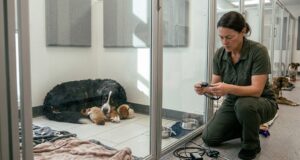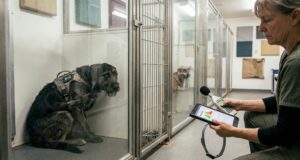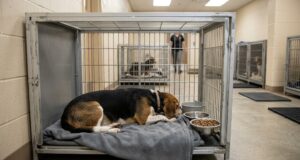
A dog returns home after a boarding stay with an unfamiliar smell, a few patches of missing hair, or persistent scratching. At first, the owner may assume the animal simply needs a bath. A closer examination, however, reveals redness beneath the collar, small crusted spots on the abdomen, or circular areas of hair loss around the face and legs.
These changes can have several different causes. Some involve contagious microorganisms, while others result from parasites, prolonged moisture, environmental irritation, or an allergic response. The difficulty is that many skin conditions look remarkably similar during their early stages.
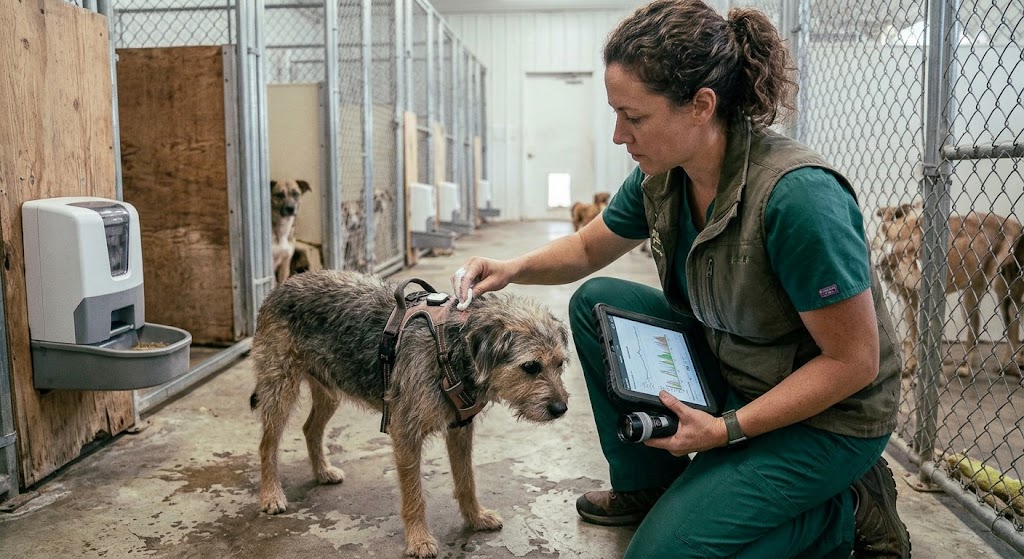
This creates an important diagnostic challenge for owners and professional Dog Boarding operators. A red patch is not automatically a bacterial infection, and a circular area of hair loss does not necessarily confirm ringworm. Treating a condition based only on appearance can delay appropriate care, expose other dogs to contagious organisms, and sometimes make the original problem worse.
Understanding the most common skin problems associated with kennel stays requires looking beyond visible symptoms. The underlying cause, the dog’s medical history, the environment, and appropriate veterinary testing all matter.
Why Skin Problems Can Develop During or After Dog Boarding
A boarding facility introduces dogs to a different environment, routine, and range of potential irritants. Even a healthy dog may experience changes that influence skin condition.
Several factors can contribute.
Close contact with other dogs: Shared environments create opportunities for contagious skin conditions, including dermatophytosis (ringworm) and certain parasitic infestations.
Environmental exposure: Bedding detergents, cleaning chemicals, grass, dust, grooming products, and other materials may irritate sensitive skin.
Moisture accumulation: Wet coats, damp bedding, swimming, bathing, and inadequate drying can contribute to skin inflammation and microbial overgrowth.
Stress and behavioral changes: Some dogs scratch, lick, or chew themselves more frequently when anxious or unsettled. Repeated self-trauma can damage the skin barrier and create conditions favorable to secondary infection.
Existing medical conditions: Dogs with allergies, endocrine disorders, parasites, or chronic skin disease may experience flare-ups during boarding.
It is important not to assume that every skin problem appearing after a kennel stay originated inside the facility. Some conditions have incubation periods, and others may have been developing before admission. The timing of symptoms provides useful information, but it does not independently establish the source.
Bacterial Skin Infections: When Normal Skin Bacteria Become a Problem
One of the most common bacterial skin conditions in dogs is superficial bacterial folliculitis, frequently associated with Staphylococcus pseudintermedius.
This bacterium can normally live on canine skin and mucous membranes without causing disease. Problems develop when the skin’s protective barrier becomes damaged or other conditions allow bacterial populations to multiply.
What triggers bacterial folliculitis?
Scratching, flea bites, allergies, moisture, minor wounds, and underlying skin disorders can all contribute.
For example, a dog with environmental allergies may repeatedly scratch its abdomen and legs during a boarding stay. Small breaks in the skin allow bacteria to enter hair follicles, resulting in inflammation.
Possible signs include:
- Small red bumps or pimples
- Pustules around hair follicles
- Crusts and scabs
- Circular areas of hair loss
- Redness and itching
- Flaky skin
In some cases, owners notice small circular lesions with a darker or crusted center. These are sometimes called epidermal collarettes and can occur with superficial bacterial infections.
Deep bacterial skin infections
If inflammation extends deeper into the skin, the condition may become more serious. Deep infections can produce painful swelling, draining wounds, pus, and significant tissue damage.
Dogs with deep skin infections require prompt veterinary attention because treatment may be more complicated than management of a superficial condition.
Why testing matters
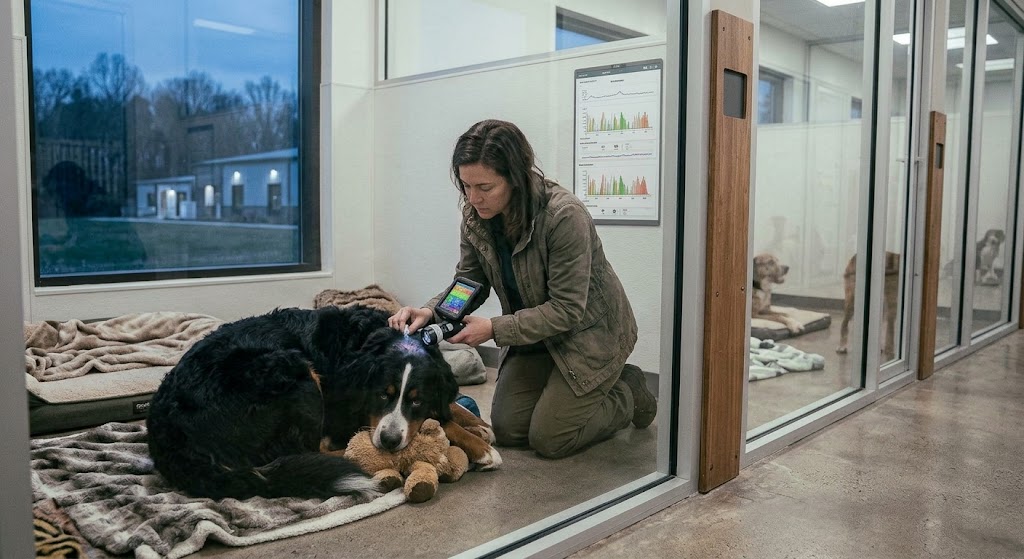
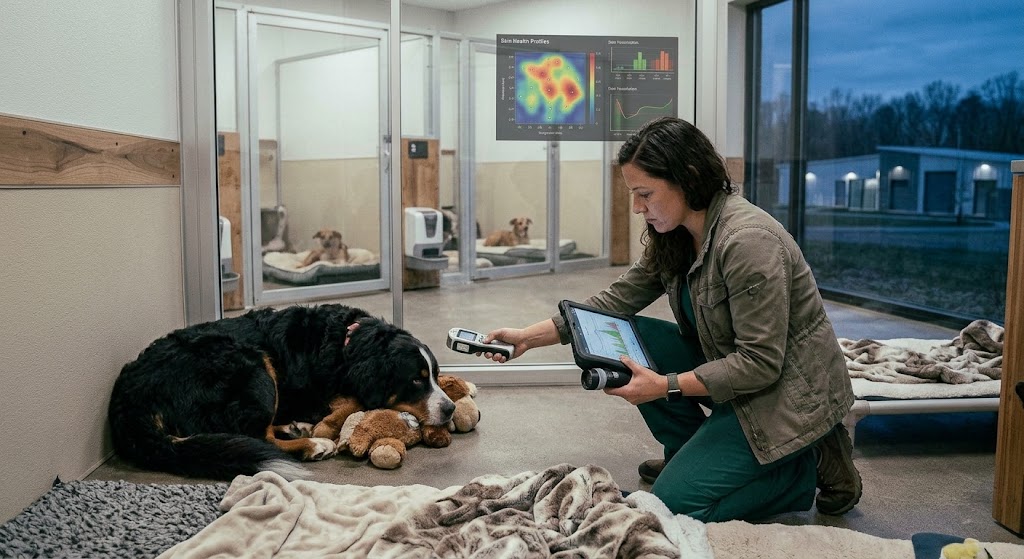
A veterinarian may examine skin samples under a microscope, perform cytology, or recommend bacterial culture and susceptibility testing.
Culture is particularly useful in recurrent, deep, or treatment-resistant infections and when antibiotic resistance is suspected.
Owners should avoid applying leftover antibiotics or human skin creams. The wrong treatment may fail to address the cause and can complicate subsequent diagnosis.
Fungal Skin Conditions: Understanding Ringworm and Yeast Overgrowth
Fungal conditions are another important concern in Dog Boarding environments. Two conditions deserve particular attention: dermatophytosis and yeast-associated dermatitis.
Although both involve fungi, they behave differently and require different diagnostic approaches.
Ringworm: A contagious fungal skin infection
Despite its name, ringworm is not caused by a worm. It is a fungal infection involving structures containing keratin, particularly the hair, skin, and sometimes nails.
Common dermatophytes affecting dogs include species of Microsporum and Trichophyton.
Infected dogs may develop:
- Circular or irregular areas of hair loss
- Broken hairs
- Scaling and crusting
- Mild to moderate redness
- Variable itching
- Brittle or abnormal nails in some cases
Ringworm can spread through direct contact with an infected animal or indirectly through contaminated bedding, brushes, grooming equipment, and environmental debris.
One reason it is particularly challenging in boarding facilities is that infected hairs and skin scales can contaminate the environment. Some dogs may also carry fungal material without showing obvious lesions.
Ringworm is zoonotic, meaning it can spread from animals to humans. Owners and staff should therefore take suspected cases seriously, particularly when children, older adults, or immunocompromised people are present.
Veterinary diagnosis may involve fungal culture, PCR testing, microscopic examination, or specialized examination under ultraviolet light. A Wood’s lamp can help identify some infections, but a negative result does not rule out ringworm because not all dermatophytes fluoresce.
Yeast dermatitis: When Malassezia becomes excessive
Malassezia pachydermatis is a yeast that normally lives on canine skin. Under certain conditions, it can multiply excessively and cause inflammation.
Yeast-associated dermatitis commonly affects:
- Ears
- Paws and between the toes
- Armpits
- Groin
- Skin folds
- Areas around the neck
Typical signs include redness, itching, greasy skin, unpleasant odor, and brown discoloration.
Some dogs develop thickened, darkened skin after repeated or chronic inflammation.
Moisture, allergies, skin folds, and underlying medical conditions can contribute to yeast overgrowth. A dog that repeatedly licks damp paws after outdoor exercise may be more likely to develop irritation and secondary microbial problems.
Veterinarians commonly use skin cytology to identify yeast organisms and assess whether their numbers are consistent with the clinical condition.
A yeast infection should not automatically be blamed on poor kennel hygiene. In many dogs, an underlying allergic or medical problem is the primary reason yeast populations become excessive.
Parasitic Skin Problems: Fleas, Mites, and Other External Parasites
Dogs entering shared boarding environments may encounter external parasites. However, some infestations are already present before admission and only become noticeable during or after the stay.
Different parasites produce different patterns of irritation, and accurate identification is essential.
Fleas and flea allergy dermatitis
Fleas are external parasites that feed on blood. Their bites can cause itching, irritation, and skin inflammation.
Some dogs develop flea allergy dermatitis, an allergic reaction to proteins in flea saliva.
Even a relatively small number of flea bites may trigger intense itching in a sensitive dog.
Common signs include:
- Scratching around the lower back and tail base
- Hair loss near the hindquarters
- Red bumps
- Scabs and crusts
- Repeated chewing of the skin
- Secondary bacterial infection
Owners sometimes fail to find visible fleas because dogs may groom them away. Flea dirt, which looks like small dark particles, may be easier to identify.
A veterinarian can help distinguish flea allergy dermatitis from other allergic or infectious conditions.
Sarcoptic mange
Sarcoptic mange is caused by the mite Sarcoptes scabiei var. canis.
It is highly contagious between dogs and can spread through close contact and, less commonly, contaminated objects.
Affected dogs often experience intense itching, especially around the ears, elbows, hocks, and abdomen.
Other signs include:
- Red, inflamed skin
- Crusting
- Hair loss
- Excoriations from scratching
- Thickened skin in advanced cases
Sarcoptic mange can also cause temporary itchy skin reactions in humans following exposure.
Skin scrapings may help identify mites, but they can be negative even when the infestation is present. Veterinarians sometimes make a diagnosis based on clinical signs, exposure history, and response to appropriate treatment.
Demodectic mange
Demodex mites are different because they commonly exist in small numbers on healthy dogs.
Demodectic mange develops when mite populations increase excessively, often in association with immune or other underlying factors.
Localized disease may produce small areas of hair loss, scaling, and redness. Generalized disease can involve larger areas of the body and may be complicated by bacterial infection.
Unlike sarcoptic mange, ordinary canine demodectic mange is generally not considered contagious between healthy adult dogs.
This distinction matters when a boarding facility decides whether other dogs need to be isolated or monitored.
Moisture-Related Skin Irritation and Hot Spots
Not every skin problem after Dog Boarding is infectious.
Moisture can contribute to irritation, particularly when a dog’s coat remains damp for extended periods or water becomes trapped against the skin.
Dogs with thick coats, skin folds, dense undercoats, or floppy ears may be particularly susceptible to moisture-related problems.
Acute moist dermatitis
Acute moist dermatitis, commonly called a hot spot, is a rapidly developing area of inflamed skin.
It often begins when a dog repeatedly scratches, licks, or chews one location. The damaged skin becomes moist, red, painful, and sometimes infected.
Hot spots may develop after:
- Swimming or bathing
- Persistent licking of damp fur
- Flea bites
- Allergic reactions
- Ear irritation
- Minor skin injuries
The affected area may expand quickly because continued chewing and scratching create additional damage.
A hot spot can resemble a bacterial infection, but the underlying process often begins with irritation and self-trauma.
Veterinary treatment may involve clipping the surrounding hair, cleaning the affected area, controlling inflammation, addressing infection when present, and identifying the original trigger.
Preventing moisture-related problems
Boarding facilities should dry dogs appropriately after bathing, swimming, or exposure to rain.
Staff should pay particular attention to:
- Skin folds
- Between the toes
- Under collars and harnesses
- Around the ears
- Beneath dense coats
- Areas where bedding remains damp
Drying should be thorough but gentle. Excessive heat, vigorous rubbing, and harsh grooming products can further irritate sensitive skin.
Allergic Reactions: When the Environment Triggers Inflammation
A dog may develop skin irritation during boarding without acquiring any contagious organism.
Allergic skin disease can be triggered or aggravated by environmental exposures, food-related factors, or parasites.
Environmental allergies
Canine atopic dermatitis is associated with an abnormal inflammatory response to environmental allergens.
Potential triggers include pollen, dust mites, molds, and other environmental substances.
Dogs may experience itching around the paws, face, ears, abdomen, and armpits.
A boarding facility may introduce unfamiliar bedding, cleaning products, outdoor surfaces, or laundry detergents that aggravate an already sensitive dog.
Contact irritation
Some substances cause irritation through direct contact rather than a true allergic immune response.
For example, a cleaning chemical that has not been properly rinsed from a surface may irritate a dog’s paws or skin.
Contact reactions may cause localized redness, itching, discomfort, or inflammation in areas that touch the affected surface.
Facilities should use appropriate animal-safe products and follow dilution, rinsing, and drying instructions.
Food-related allergic reactions
Food allergies can also contribute to chronic itching, recurrent ear infections, and skin inflammation.
However, a new skin problem appearing immediately after a boarding stay does not prove that the facility’s food caused an allergy.
Diagnosing food allergy generally requires a veterinarian-supervised elimination diet using an appropriate diet for a defined period, followed by controlled dietary evaluation. Simple food changes or commercial allergy panels do not reliably establish the diagnosis.
Why Skin Appearance Alone Cannot Establish a Diagnosis
This is one of the most important principles in veterinary dermatology.
Several unrelated conditions can produce almost identical visible signs.
For example:
| Visible sign | Possible explanations |
|---|---|
| Circular hair loss | Ringworm, bacterial folliculitis, demodectic mange |
| Red, itchy skin | Allergies, parasites, bacterial infection, contact irritation |
| Greasy skin and odor | Yeast overgrowth, bacterial infection, skin-fold inflammation |
| Scabs and crusts | Bacterial infection, mites, trauma, allergic disease |
| Excessive paw licking | Allergies, yeast, bacteria, foreign material, pain |
| Sudden moist lesion | Hot spot, self-trauma, secondary infection |
The same dog may also have more than one condition at once.
A dog with flea allergy dermatitis, for instance, may develop secondary bacterial infection after repeatedly scratching its skin.
A dog with environmental allergies may experience both yeast overgrowth and recurrent ear inflammation.
Treating only the visible infection without identifying the underlying trigger can lead to repeated episodes.
Veterinary diagnostic methods
A veterinarian may use several diagnostic techniques depending on the suspected condition.
Skin cytology: Examines cells, bacteria, and yeast collected from the skin surface or affected area.
Skin scrapings: Help identify mites, although some infestations may not be detected in a single sample.
Fungal culture: Helps identify dermatophytes responsible for ringworm.
PCR testing: Detects genetic material from selected infectious organisms.
Bacterial culture and sensitivity: Identifies bacterial organisms and helps determine which antibiotics are likely to work.
Wood’s lamp examination: Can support identification of certain dermatophyte infections but cannot rule out ringworm when negative.
Allergy investigation: May involve a detailed history, parasite control, elimination diets, and additional testing where appropriate.
The veterinarian chooses tests based on the dog’s symptoms, medical history, and physical examination. Not every dog requires every test.
What Owners Should Do When Skin Problems Appear After Dog Boarding
If a dog develops unexplained itching, hair loss, redness, or skin lesions after a boarding stay, owners should arrange veterinary assessment rather than immediately trying several home treatments.
Useful steps include:
- Photograph the affected areas so changes can be compared over time.
- Record when the first symptoms appeared.
- Note any recent bathing, grooming, swimming, or outdoor activities.
- Inform the veterinarian about the boarding stay and any known exposure to other dogs.
- Avoid applying human creams, leftover antibiotics, or unapproved insecticides.
- Prevent excessive licking or chewing when possible and safe.
- Follow the veterinarian’s treatment and follow-up instructions.
If ringworm, mange, or another contagious condition is suspected, owners should limit contact with other animals until they receive veterinary advice.
Prompt attention is particularly important if the dog has painful swelling, rapidly spreading lesions, pus, fever, marked lethargy, loss of appetite, or severe itching.
Facial swelling, breathing difficulty, collapse, or other signs of a serious allergic reaction require emergency veterinary care.
How Dog Boarding Facilities Can Reduce Skin Disease Risks
Prevention requires consistent procedures rather than relying on occasional deep cleaning.
Professional facilities should establish protocols covering both infectious skin conditions and noninfectious irritation.
Admission screening
Before accepting a dog, staff should ask about:
- Existing skin disease
- Recent itching or hair loss
- Current flea and tick prevention
- Recent treatment for mange or ringworm
- Open wounds or draining lesions
- Known allergies
- Medications and special grooming requirements
A visible skin problem does not automatically mean a dog cannot be accommodated, but staff should understand whether the condition presents a risk to other animals.
Bedding and equipment hygiene
Bedding should be washed regularly and whenever contaminated. Brushes, grooming tools, collars, and other reusable items should be cleaned appropriately between dogs.
Separate equipment should be maintained for animals with suspected contagious skin conditions.
Environmental cleaning
Floors, resting areas, grooming spaces, and frequently touched surfaces should be included in documented cleaning schedules.
Facilities should use products appropriate for the organisms they are trying to control. For dermatophytes, for example, environmental control may require particular attention to contaminated hair and skin scales, not just visible surface dirt.
Staff education
Employees should learn to recognize early signs of skin disease, avoid sharing grooming equipment without proper cleaning, and report unexplained lesions.
Staff should not diagnose skin conditions independently or begin medication without veterinary direction.
Isolation and communication
When a contagious condition is suspected, the affected dog should be managed according to veterinary advice.
Owners should be informed promptly, and the facility should assess whether other dogs may have been exposed.
Clear communication helps prevent further transmission and allows owners to seek treatment before symptoms become severe.
When a Skin Condition Requires Immediate Veterinary Attention
Many mild skin problems can be managed successfully, but certain signs suggest a more serious condition.
Seek prompt veterinary care if a dog develops:
- Rapidly spreading skin lesions
- Severe or persistent itching
- Painful swelling
- Pus or extensive discharge
- Deep or bleeding wounds
- Significant hair loss over large areas
- Fever or unusual lethargy
- Reduced appetite alongside skin symptoms
- Signs of a widespread parasitic infestation
A dog with facial swelling, breathing difficulty, collapse, or suspected severe allergic reaction needs emergency attention.
Early diagnosis can prevent a relatively localized skin condition from developing into a more complicated medical problem.
A Healthier Approach to Skin Care During Dog Boarding
Skin problems appearing after a kennel stay can be unsettling, but they should not automatically be attributed to poor hygiene or a single contagious infection. Bacteria, fungi, mites, fleas, allergies, moisture, and self-inflicted skin damage can produce overlapping symptoms.
For owners, the most valuable step is obtaining an accurate veterinary diagnosis rather than judging the condition by appearance alone.
For boarding operators, effective prevention means combining admission screening, clean bedding, properly maintained equipment, careful drying, environmental hygiene, and early reporting of unusual skin changes.
Responsible Dog Boarding is not simply about noticing when a dog has developed a rash. It is about recognizing that the skin is a protective organ, understanding what can compromise it, and responding in a way that protects the affected animal as well as every other dog sharing the facility.