Introduction: When a Temporary Stay Becomes a Long-Term Adjustment
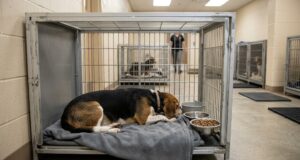
Dog boarding is often arranged around practical circumstances. Owners may need to travel for work, relocate, manage family emergencies, or spend extended periods away from home. A few nights in a boarding facility may be manageable for many dogs, but an extended stay introduces a different set of challenges. The animal is not simply spending more time away from its owner. It is adapting to an unfamiliar living environment in which feeding schedules, sleeping arrangements, human contact, physical activity, and opportunities for independent exploration may all change.
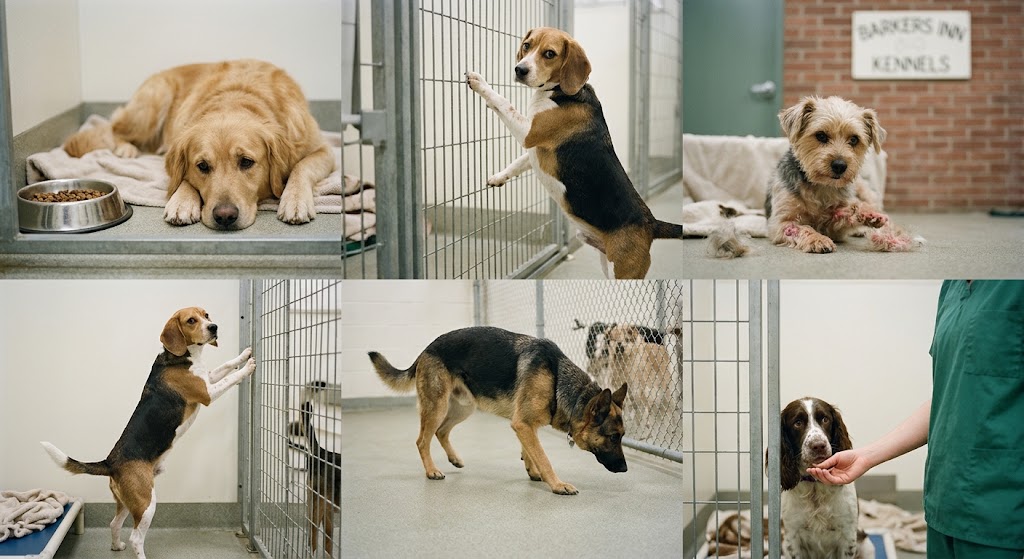
The consequences are not necessarily immediate. A dog might eat normally during the first few days, appear comfortable with staff, and participate in scheduled activities. Several weeks later, however, subtle changes may become apparent. The dog may begin leaving food unfinished, sleeping poorly, becoming unusually dependent on familiar handlers, or showing less interest in activities it previously enjoyed.
These developments deserve attention because canine welfare cannot be judged by whether an animal appears calm or behaves cooperatively. Some dogs express discomfort through obvious agitation, while others become quieter and less responsive. Both patterns can indicate that the boarding environment is not meeting their individual needs.
Understanding the progression of these difficulties is particularly important for professional dog boarding operators. Their responsibility extends beyond providing food, shelter, and basic supervision. They must recognize changes in individual behavior, distinguish temporary adjustment from developing welfare problems, and modify care before manageable difficulties become persistent.
The First Several Days: Separation Stress and Disrupted Eating Habits
One of the earliest changes associated with dog boarding is a disruption in normal eating behavior. A dog accustomed to receiving meals in a familiar kitchen, at a predictable time, and beside familiar people suddenly has to eat in a different environment.
This change can affect appetite even when the facility provides an appropriate diet.
Why Some Dogs Refuse Their Food
Dogs depend heavily on familiar routines. Feeding is not simply a biological activity; it is often associated with predictable environmental signals, including the owner’s presence, household sounds, particular bowls, and established meal times.
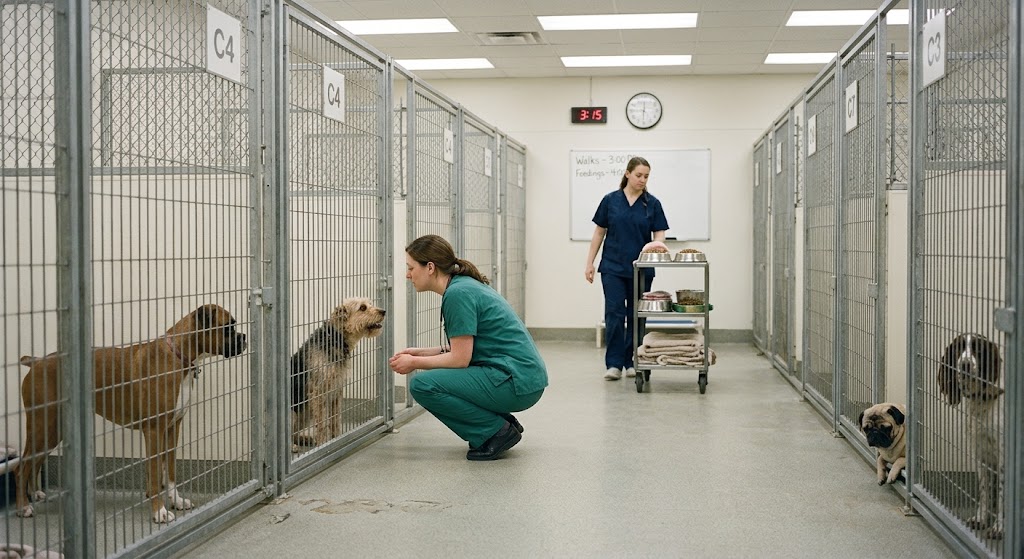
When these signals disappear, some dogs become temporarily reluctant to eat. Others approach their food but consume only a small portion before becoming distracted by unfamiliar noises or nearby animals.
The problem can become more complicated when a boarding facility introduces a different food. Even a nutritionally complete diet may cause digestive discomfort if the transition is abrupt. Changes in ingredients, meal frequency, portion sizes, and feeding speed can contribute to loose stools, vomiting, or reduced appetite.
Dogs with sensitive digestive systems may be particularly affected.
Why Monitoring Matters More Than a Single Missed Meal
A dog skipping one meal does not automatically indicate a serious welfare problem. However, repeated reductions in food consumption should not be dismissed as ordinary homesickness.
Staff should document:
- The amount of food offered and consumed.
- Whether the dog eats immediately or only after staff leave.
- Changes in drinking habits.
- Vomiting, diarrhea, or unusually soft stools.
- Changes in body weight and general energy.
A dog that refuses food for a prolonged period, particularly when accompanied by vomiting, lethargy, abdominal discomfort, or other symptoms, needs veterinary assessment. Puppies, elderly dogs, and animals with existing medical conditions may require earlier intervention.
Preventing Feeding Problems During Extended Stays
Owners should provide sufficient quantities of the dog’s established food and clear instructions about feeding times, portion sizes, supplements, and dietary restrictions.
Boarding facilities should avoid unnecessary dietary changes. If a change is medically or operationally necessary, it should be introduced gradually whenever circumstances permit and with appropriate veterinary guidance.
For longer reservations, periodic weight checks and written feeding records can help identify gradual changes that might otherwise go unnoticed.
After the Initial Adjustment: Changes in Physical Activity
A dog may initially respond to a new boarding environment with increased movement. There are unfamiliar smells to investigate, different people to observe, and other animals nearby. This activity can look like enthusiasm, but increased movement does not necessarily indicate improved well-being.
Research examining privately owned dogs in their homes and boarding kennels found that dogs were generally more active in kennels, although individual responses varied considerably. The researchers also emphasized that physiological arousal and visible activity should be interpreted carefully rather than automatically classified as positive or negative stress.
The Difference Between Exercise and Restless Movement
Structured exercise gives dogs opportunities to walk, investigate their surroundings, explore different surfaces, and engage in natural behaviors.
Restless pacing is different. A dog repeatedly walking between the same sections of its enclosure may be displaying frustration, vigilance, or difficulty settling.
The distinction matters because a boarding facility might record substantial daily movement without providing meaningful physical or mental stimulation.
A dog that spends much of the day walking in circles or reacting to neighboring kennels may still be experiencing inadequate exercise and enrichment.
What Happens When Exercise Becomes Inconsistent?
As an extended stay progresses, insufficient activity can contribute to several problems:
- Reduced muscle conditioning, particularly in dogs accustomed to regular exercise.
- Weight gain when food intake exceeds energy expenditure.
- Increased frustration and repetitive movement.
- Reduced opportunities to investigate and interact with the environment.
- Difficulty settling because physical and mental needs remain unmet.
The opposite problem also deserves consideration. Excessive exercise can be harmful for elderly dogs, overweight animals, puppies, and dogs recovering from orthopedic injuries.
A high-energy young dog and an older dog with arthritis should not receive identical exercise schedules.
Designing an Individual Exercise Routine
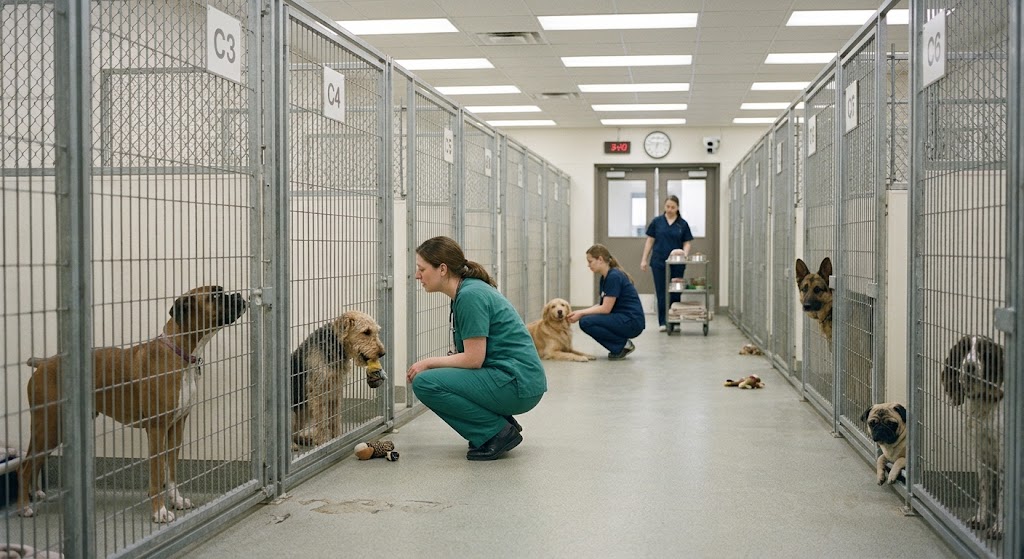
Professional dog boarding should involve more than releasing every dog into a shared play area. Exercise needs to account for age, breed characteristics, physical condition, temperament, and medical history.
A practical routine may combine controlled walks, supervised outdoor exploration, appropriate play, scent-based activities, and periods of uninterrupted rest.
The objective is not to keep dogs constantly occupied. It is to provide sufficient activity while preserving their ability to relax.
The First Few Weeks: Sleep Disruption and Inadequate Recovery
Sleep is frequently overlooked when evaluating the quality of dog boarding. Owners may receive reports about feeding, walks, and play sessions without learning whether their dogs are actually sleeping comfortably.
An unfamiliar sleeping environment can interfere with normal rest patterns.
Environmental Factors That Interrupt Sleep
Boarding facilities may expose dogs to sounds they rarely encounter at home. Barking from neighboring kennels, staff movement, cleaning equipment, unfamiliar footsteps, and doors opening throughout the night can repeatedly interrupt rest.
Temperature, lighting, bedding, and the location of the sleeping enclosure also matter.
Some dogs sleep poorly because they remain alert to nearby animals. Others become unsettled when they cannot retreat from visual contact with unfamiliar dogs or people.
The problem is not always obvious. A dog may lie down for extended periods without entering a comfortable, restorative sleep state.
The Relationship Between Rest and Emotional Regulation
Rest supports normal physiological functioning and helps dogs recover from physical and mental activity. When sleep is repeatedly interrupted, some animals become more reactive, less tolerant of handling, or unusually sensitive to environmental changes.
Others may appear withdrawn or spend increasing amounts of time inactive.
However, inactivity must be interpreted carefully. A relaxed dog resting comfortably is not displaying the same behavior as an animal that remains motionless while appearing tense, withdrawn, or unresponsive.
Research reviewed in the scientific literature on kennelled dogs suggests that daytime resting patterns may provide useful information about welfare, but their meaning depends on the broader behavioral picture.
Improving Sleep Quality in Boarding Facilities
Facilities should provide:
- A quiet sleeping area separated from unnecessary disturbances.
- Comfortable bedding suitable for the dog’s size and physical condition.
- Appropriate temperature and ventilation.
- Consistent nighttime routines.
- Protection from excessive light and noise.
- Sufficient daytime exercise without overstimulation.
A familiar blanket or bedding item supplied by the owner may also help some dogs settle, provided it can be kept clean and used safely.
Several Weeks Into Boarding: Social Behavior and Changing Relationships
Dogs are social animals, but their social needs are not identical. Some actively seek interaction with unfamiliar dogs, while others prefer human companionship or limited contact with carefully selected animals.
Long-term dog boarding can expose these differences more clearly than a short visit.
Why Group Play Is Not Appropriate for Every Dog
Some boarding facilities use group play as a central part of their daily activities. Although compatible social interaction can provide enrichment, placing unfamiliar dogs together without proper assessment can create unnecessary pressure.
Competition may develop around toys, food, resting areas, or human attention. Differences in play style can also cause problems. A physically confident dog may repeatedly pursue an animal that prefers distance and quiet interaction.
What looks like harmless play to a person may become overwhelming for a dog that cannot easily withdraw.
The safest approach involves assessing temperament, communication signals, size, activity levels, and previous social experiences before arranging group activities.
Social Withdrawal and Excessive Attachment
Two apparently opposite behaviors can develop during an extended stay.
One dog may become increasingly withdrawn, avoiding other animals and showing little interest in interaction. Another may become unusually dependent on a particular staff member, following that person whenever possible and becoming unsettled when they leave.
These reactions should be evaluated in context. A dog that prefers human company is not necessarily experiencing a behavioral disorder, and a naturally independent dog should not be forced into constant social interaction.
Nevertheless, sudden changes from the animal’s normal behavior deserve attention.
Managing Social Contact Safely
Boarding operators should provide individual interaction as well as carefully supervised opportunities for compatible dogs to spend time together.
Dogs should always have the ability to move away from unwanted interactions. Separate resting areas, individual feeding arrangements, and appropriate barriers can reduce competition and prevent conflicts.
A useful principle is to provide social opportunities without making social participation compulsory.
One Month and Beyond: Emotional Stress That Becomes More Difficult to Recognize
The emotional consequences of long-term dog boarding are not always visible through dramatic behavior.
Some dogs bark, jump, pull at gates, or repeatedly seek attention. Others become unusually quiet and appear to accept their circumstances.
Neither response should be interpreted without considering the dog’s previous personality and behavior.
Recognizing Persistent Stress
Potential signs of ongoing distress include:
- Repeated pacing or circling.
- Excessive barking or whining.
- Persistent vigilance toward neighboring animals.
- Frequent lip licking or other stress-associated behaviors.
- Avoidance of unfamiliar people.
- Reduced interest in play or exploration.
- Difficulty settling even after exercise.
- Unusual changes in appetite or sleeping patterns.
These behaviors are not individually diagnostic. Lip licking, for example, can occur in several ordinary situations, and barking may reflect excitement, communication, frustration, or environmental stimulation.
The important question is whether the behavior represents a meaningful change for that particular dog and whether several indicators are appearing together.
Why a Dog May Become Quieter Rather Than More Vocal
A common mistake is to assume that a quiet dog is necessarily comfortable.
Some animals respond to prolonged environmental pressure by reducing interaction and activity. They may spend more time resting, show less interest in unfamiliar surroundings, or stop initiating contact.
Such behavior can be mistaken for successful adjustment.
Staff should therefore evaluate more than noise levels. Interest in food, willingness to explore, relaxed body posture, response to familiar handlers, and engagement with enrichment activities can provide additional information.
The Limits of Stress Measurements
Scientific research has examined physiological indicators such as cortisol, a hormone associated with the body’s stress response. These measurements can contribute to welfare assessments, but they do not provide a simple answer about how an individual dog feels.
A physiological increase in arousal does not automatically prove negative emotional distress. Similarly, a single normal measurement cannot establish that a dog is comfortable.
A more reliable assessment combines health observations, behavior, environmental conditions, and changes over time.
Hidden Health Complications During Extended Dog Boarding
Behavioral changes should never automatically be attributed to separation from the owner. An animal that becomes unusually quiet, refuses meals, or avoids exercise may have an underlying medical problem.
Extended stays also increase the importance of preventive healthcare and consistent monitoring.
Infectious Disease Exposure
Dogs from different households share an environment in many boarding establishments. Even with appropriate hygiene, vaccination requirements, and screening procedures, close contact can create opportunities for infectious disease transmission.
Respiratory infections are a particular concern in environments where multiple dogs share airspace and social contact.
Coughing, nasal discharge, sneezing, fever, reduced appetite, and lethargy should be assessed promptly. Facilities should have procedures for isolating symptomatic animals and arranging veterinary care.
Skin, Ear, and Digestive Problems
Changes in humidity, bathing frequency, bedding cleanliness, outdoor exposure, and contact with other animals can contribute to skin and ear problems.
Dogs with allergies or chronic dermatological conditions may need additional monitoring.
Digestive problems also deserve attention. Stress, dietary changes, scavenging, and exposure to unfamiliar treats can all contribute to gastrointestinal disturbances.
A boarding facility should maintain an accurate record of medication administration, symptoms, veterinary consultations, and changes in the dog’s condition.
Mobility and Chronic Conditions
Older dogs and animals with existing medical conditions may deteriorate if their exercise routine is poorly managed.
A dog with arthritis, for example, may become reluctant to walk because of pain rather than behavioral resistance. Similarly, a dog with an underlying heart or respiratory condition may not tolerate vigorous group activities.
Owners should provide written medical instructions and emergency veterinary contact information before an extended reservation begins.
Dogs That Face Greater Difficulties During Long-Term Boarding
Not every dog experiences boarding in the same way. An environment that works well for a confident, socially experienced adult dog may be unsuitable for an animal with medical limitations or a history of anxiety.
Certain groups require additional consideration.
Puppies and Adolescent Dogs
Young dogs are still developing their behavioral responses to unfamiliar situations. Their experiences during this period can influence how they respond to new environments, people, and animals later in life.
Long periods in a boarding environment with insufficient positive interaction may limit opportunities for appropriate social learning.
Puppies also need frequent feeding when appropriate for their age, regular toilet opportunities, adequate sleep, and carefully controlled exercise.
Senior Dogs
Older dogs may find changes in routine particularly difficult when they have reduced hearing, vision problems, arthritis, or other age-related conditions.
A senior dog that previously enjoyed long walks may need shorter, more frequent outings. Slippery flooring, elevated sleeping platforms, and competition during group activities can create additional risks.
A suitable boarding arrangement should prioritize accessibility, predictable handling, and sufficient recovery time.
Dogs With Previous Separation Difficulties
Dogs with a history of separation-related distress may experience substantial difficulty when separated from their owners for several weeks.
Their reactions can include vocalization, destructive behavior, attempts to escape, excessive attachment to staff, and difficulty eating or sleeping.
These animals may require an individualized behavioral management plan developed with a veterinarian or qualified behavior professional before an extended stay.
How Boarding Facilities Can Identify Problems Before They Become Serious
A major weakness in some boarding operations is the reliance on general daily observations rather than individual welfare records.
Statements such as “the dog is doing fine” provide little useful information when an animal has been away from home for several weeks.
A more effective system follows changes in the dog’s condition over time.
Establishing a Baseline Before Arrival
Before accepting a long-term reservation, staff should collect information about the dog’s normal behavior.
This should include:
- Typical appetite and feeding preferences.
- Normal sleeping arrangements and habits.
- Daily exercise requirements.
- Previous boarding experiences.
- Reactions to unfamiliar dogs and people.
- Existing medical conditions and medications.
- Known fears, sensitivities, and behavioral difficulties.
Where possible, owners should provide recent photographs or videos showing the dog’s ordinary behavior at home. These can help staff distinguish established personality traits from changes that develop during boarding.
Maintaining Individual Welfare Records
A useful monitoring system should record observations consistently rather than relying on memory.
| Welfare area | What staff should monitor |
|---|---|
| Nutrition | Food consumption, drinking, weight changes |
| Physical activity | Exercise participation, mobility, fatigue |
| Sleep | Resting patterns, nighttime disturbances |
| Social behavior | Interaction, avoidance, conflict, engagement |
| Emotional condition | Vocalization, pacing, vigilance, withdrawal |
| Physical health | Stool quality, coughing, skin condition, injuries |
These records become especially valuable when different employees care for the same dog across several shifts.
A pattern of gradual deterioration may be obvious when observations are compared over three or four weeks, even if individual daily changes appear minor.
Establishing Veterinary Intervention Procedures
Every professional dog boarding facility should have a clear procedure for contacting a veterinarian.
Staff should know when a change requires immediate attention, when the owner must be informed, and how medical instructions are documented.
Persistent appetite loss, repeated vomiting, breathing difficulties, severe diarrhea, injuries, or sudden behavioral changes should never be dismissed as ordinary boarding adjustment.
Practical Strategies for Owners Preparing Dogs for Extended Boarding
The quality of long-term dog boarding depends partly on decisions made before the dog arrives.
Owners can reduce unnecessary disruption by preparing their animals gradually.
Arrange Short Visits Before a Long Reservation
If possible, introduce the dog to the facility through a supervised visit or short stay before arranging several weeks of boarding.
This allows the dog to become familiar with the surroundings, staff members, sounds, and daily routines.
It also gives the facility an opportunity to evaluate whether its environment is appropriate for that particular animal.
Maintain Familiar Feeding and Sleeping Arrangements
Provide the dog’s regular food, feeding instructions, and information about dietary sensitivities.
A familiar blanket or safe bedding item may provide useful environmental continuity. Owners should also explain whether the dog normally sleeps alone, in a crate, or in a particular area of the home.
Share Accurate Behavioral Information
It is important not to hide behavioral difficulties when making a reservation.
If a dog dislikes unfamiliar animals, becomes anxious around loud noises, or has previously attempted to escape from unfamiliar environments, the boarding staff need to know.
Accurate information helps them select appropriate accommodation and avoid situations that may create unnecessary distress.
Stay in Contact Without Disrupting the Dog’s Routine
Regular updates can reassure owners and help them identify concerns.
However, communication should focus on useful information rather than photographs alone. Owners should ask whether their dog is eating normally, sleeping comfortably, participating in activities, and behaving consistently.
Some dogs respond positively to familiar voices or recorded messages, while others become unsettled after hearing their owners. Such contact should be based on the individual dog’s response rather than assumed to be beneficial.
When Long-Term Boarding May No Longer Be the Right Arrangement
There are circumstances in which a facility can provide good basic care but still fail to meet an individual dog’s behavioral or emotional needs.
For example, a dog that repeatedly develops severe distress in a busy kennel environment may do better in a quieter home-boarding arrangement.
Another dog may require an environment with specialist medical supervision.
The Australian Veterinary Association recognizes that animals showing persistent anxiety or behavioral difficulties in boarding establishments may not be suited to the particular style of care being offered.
This is an important distinction. The problem is not necessarily that the dog is difficult or that the facility is poorly managed. Sometimes the arrangement itself is unsuitable.
Owners and boarding operators should consider alternatives when a dog shows persistent deterioration despite reasonable management changes.
Possible alternatives include:
- Home boarding with an experienced caregiver.
- A trusted family member or professional pet sitter.
- A quieter facility with individual accommodation.
- Specialist boarding for dogs requiring medical or behavioral support.
The best alternative depends on the animal’s health, temperament, social preferences, and individual circumstances.
Long-Term Dog Boarding Requires Continuous Welfare Assessment
The challenges associated with long-term dog boarding rarely develop in isolation. Changes in appetite can coincide with disrupted sleep. Reduced opportunities for meaningful activity can contribute to frustration, while repeated social pressure may affect a dog’s willingness to interact with unfamiliar animals.
What makes these problems difficult to identify is their gradual progression. A dog that appears comfortable during its first few days may respond differently after several weeks of unfamiliar routines and environmental stimulation.
For owners, selecting a boarding facility should involve more than comparing prices, accommodation photographs, or advertised exercise schedules. The ability to recognize individual behavioral changes, maintain accurate records, provide appropriate enrichment, and arrange veterinary assistance is equally important.
For boarding operators, high-quality care means treating each animal as an individual rather than assuming that the same daily routine will suit every dog.
Ultimately, successful dog boarding is not measured simply by how well a dog tolerates separation from its owner. It is measured by whether the animal remains physically healthy, emotionally comfortable, appropriately stimulated, and able to rest throughout the entire stay.
An extended boarding arrangement should be reviewed continuously. When a dog’s needs change, its care plan must change with them.
Research and Further Reading
The following scientific and animal welfare resources provide additional background for the issues discussed in this article:
- Taylor and Mills, The Effect of the Kennel Environment on Canine Welfare: A Critical Review of Experimental Studies, Animal Welfare.
- Part et al., Physiological, Physical and Behavioural Changes in Dogs When Kennelled: Testing the Validity of Stress Parameters, Physiology & Behavior (2014).
- Grigg et al., Evaluating Pair Versus Solitary Housing in Kennelled Domestic Dogs Using Behaviour and Hair Cortisol: A Pilot Study (2017).
- Assessing the Welfare of Kennelled Dogs—A Review of Animal-Based Measures.
- Royal Society for the Prevention of Cruelty to Animals (RSPCA), Choosing a Dog Boarding Kennel or Daycare.
- Australian Veterinary Association, Boarding Facilities Including Dog and Cat Daycare Centres.