Introduction: When Environmental Stress Becomes a Physical Health Concern
A dog may enter a boarding kennel without any obvious medical problems and leave with changes in appetite, bowel movements, sleeping habits, or general behavior. Owners sometimes assume these changes are simply the result of missing familiar people. However, the physical consequences of environmental stress deserve closer examination.
Dog boarding introduces several potential stressors simultaneously. An animal may experience separation from its owner, unfamiliar sounds, restricted movement, disrupted sleep, unfamiliar dogs, and changes in daily routines. These experiences can activate biological systems designed to help the body respond to challenges.
A short-lived stress response is a normal part of canine physiology. It helps an animal remain alert and respond to unfamiliar situations. Problems become more concerning when stressful conditions are intense, repeated, or insufficiently balanced by opportunities for recovery.
The relationship between kennel stress and physical health involves several interconnected systems, including the hypothalamic-pituitary-adrenal axis, digestive function, sleep regulation, and immune activity.
Scientific evidence does not establish that every dog experiences physical harm during boarding. Individual temperament, previous kennel experience, health status, and environmental quality all influence the response. Nevertheless, veterinary and animal-welfare research provides important reasons for monitoring physical and behavioral changes throughout an extended stay.

1. The Biological Stress Response: What Happens Inside a Dog’s Body?
When a dog encounters an unfamiliar or threatening situation, its nervous system initiates a coordinated response intended to prepare the body for action.
This process involves two major biological systems: the sympathetic nervous system and the hypothalamic-pituitary-adrenal (HPA) axis.
Activation of the Sympathetic Nervous System
The sympathetic nervous system produces a rapid response to perceived challenges.
Adrenaline and noradrenaline are released, increasing physiological readiness. Heart rate may rise, breathing may become faster, and blood flow is redirected toward tissues involved in physical activity.
In a boarding environment, these responses may occur when a dog encounters unfamiliar animals, hears sudden barking, experiences unexpected handling, or becomes separated from its owner.
The response is not automatically harmful. It is an adaptive mechanism that helps animals react to changing circumstances.
However, repeated stimulation without sufficient opportunities to relax can make the environment more difficult to tolerate.
Activation of the HPA Axis
The second major pathway involves the HPA axis.
The process begins when the hypothalamus releases corticotropin-releasing hormone (CRH). This signals the pituitary gland to release adrenocorticotropic hormone (ACTH), which stimulates the adrenal cortex to produce cortisol.
Cortisol helps regulate energy availability, metabolism, inflammation, and other physiological functions.
It is therefore inaccurate to describe cortisol simply as a harmful hormone. Its production is essential for normal health.
The concern arises when cortisol responses become unusually prolonged, repeatedly elevated, or otherwise dysregulated.
For dogs undergoing dog boarding, changes in cortisol can provide information about physiological arousal, but they must be interpreted alongside behavior, health observations, and environmental conditions.
2. Cortisol: Understanding the Difference Between Temporary and Persistent Stress
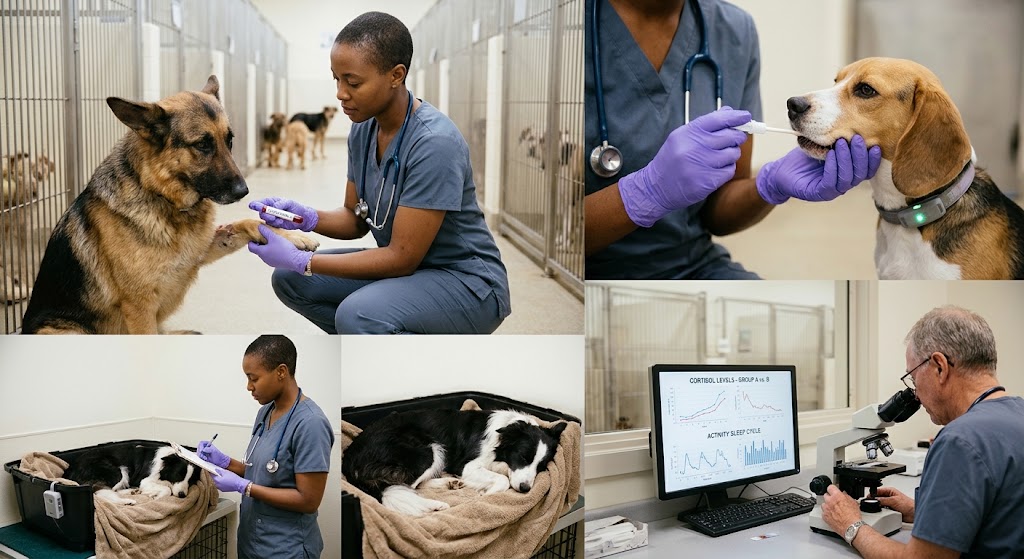
Cortisol is one of the most frequently studied physiological indicators in canine welfare research.
Researchers measure it through several biological samples, including blood, saliva, urine, feces, and hair. Each method provides different information and has limitations.
Why Cortisol May Increase During Kennel Entry
Moving from a familiar home into an unfamiliar kennel can produce an increase in physiological arousal.
A dog must adjust to new smells, sounds, people, physical boundaries, and daily routines. Even an animal that appears calm may experience measurable physiological changes.
Part and colleagues examined 29 privately owned dogs in their homes and in a boarding kennel environment in a 2014 study published in Physiology & Behavior.
The researchers found higher urinary cortisol-to-creatinine ratios in the kennel environment than at home. Dogs were also generally more active in kennels, although individual responses varied considerably.
Importantly, the study did not establish that every dog experienced negative emotional stress. It demonstrated physiological differences associated with the change in environment.
Why Cortisol Is Not a Complete Measure of Welfare
A high cortisol measurement does not automatically mean that a dog is suffering.
Physical exercise, excitement, anticipation, illness, and other forms of arousal can also influence cortisol production.
The opposite problem is equally important. A dog experiencing prolonged stress may not always show continuously elevated cortisol measurements.
Changes in HPA-axis regulation can produce altered responses to later challenges. Therefore, a low measurement should not automatically be interpreted as evidence of good welfare.
Researchers increasingly recommend combining physiological measurements with behavioral observations and information about the animal’s environment.
What Happens During Longer Stays?
Evidence from kennelled populations suggests that cortisol responses can change over time.
Some dogs show decreasing measurements as they become familiar with their surroundings. Others continue to display physiological or behavioral signs of difficulty.
Previous kennel experience, individual temperament, environmental enrichment, and housing conditions can influence these patterns.
A boarding facility should therefore avoid assuming that every dog will become comfortable after a predetermined adjustment period.
3. Sleep Disruption: How an Unfamiliar Kennel Interferes With Physical Recovery
Sleep is one of the most important but frequently overlooked components of canine welfare.
Dogs need sufficient opportunities for uninterrupted rest. Their sleeping patterns are influenced by age, activity, environmental conditions, health, and individual differences.
A boarding kennel can interfere with these conditions in several ways.
Noise and Environmental Stimulation
Continuous barking, cleaning equipment, staff movement, doors opening, and nearby animals can interrupt resting periods.
A dog may lie down but repeatedly lift its head whenever another animal makes a noise. Such fragmented rest is different from comfortable, uninterrupted sleep.
Lighting and temperature can also influence sleeping patterns.
An enclosure that remains brightly illuminated late into the evening or becomes excessively warm may make it more difficult for some dogs to settle.
The Relationship Between Sleep and Stress
Sleep and stress influence one another.
Environmental stimulation can interfere with sleep, while insufficient rest may make an animal less tolerant of additional stimulation.
A dog experiencing repeated nighttime interruptions may become more reactive during the day, show reduced interest in activities, or struggle to settle after exercise.
Research investigating environmental influences on sleep in kennelled dogs has identified relationships between factors such as temperature, light, sound, and sleeping behavior.
These findings support the importance of environmental management, although the exact effects vary with the conditions studied.
Why Resting Time Should Be Monitored
A boarding facility should not measure welfare exclusively through walking and play schedules.
Staff should also consider whether dogs have quiet periods during which they can rest without continuous disturbance.
Useful improvements include:
- Providing comfortable, appropriately sized sleeping areas.
- Separating resting areas from high-traffic corridors.
- Reducing unnecessary nighttime noise.
- Maintaining suitable ventilation and temperature.
- Providing predictable daily routines.
- Allowing individual dogs to retreat from unwanted interactions.
The goal is not simply to increase the number of hours a dog spends lying down. It is to create conditions that support comfortable, restorative rest.
4. Digestive Changes: Why Stress Can Affect the Gastrointestinal System
The digestive system is closely connected to the nervous system. Communication between the brain, gut, immune system, and intestinal microorganisms is commonly described as the gut-brain axis.
This relationship helps explain why stressful experiences can coincide with digestive disturbances.
Changes in Gastrointestinal Movement
Stress-related activation of the nervous and endocrine systems can influence gastrointestinal motility, secretion, and sensitivity.
Some dogs may develop loose stools, altered bowel frequency, or reduced appetite after entering a boarding facility.
Other animals may experience constipation when their normal walking and elimination routines change.
However, these symptoms are not specific to stress.
Dietary changes, infectious diseases, intestinal parasites, food intolerance, medication effects, and other medical conditions can produce similar problems.
The Role of the Gut Microbiome
The canine gastrointestinal tract contains a complex community of microorganisms that contributes to digestion, nutrient processing, and interactions with the immune system.
Researchers are increasingly investigating how stress, diet, and environmental changes influence the gut microbiome.
The relationship is complex because changes in microbial populations may occur alongside alterations in feeding behavior, gastrointestinal movement, and physiological stress responses.
Although this is an important developing area of research, it would be premature to claim that ordinary short-term dog boarding causes permanent damage to a dog’s gut microbiome.
Recognizing Digestive Warning Signs
Boarding staff should monitor:
- Repeated loose stools or diarrhea.
- Vomiting or retching.
- Unusually hard or infrequent stools.
- Excessive gas or abdominal discomfort.
- Reduced appetite.
- Changes in water consumption.
- Blood or unusual material in feces.
Persistent symptoms require veterinary evaluation rather than an assumption that the dog is simply adjusting to boarding.
A facility should also maintain consistent feeding routines and avoid unnecessary dietary changes.
5. Immune Function: Can Prolonged Stress Affect a Dog’s Ability to Resist Disease?
The immune system protects dogs against bacteria, viruses, parasites, and other potential threats.
It also participates in tissue repair and the regulation of inflammation.
Because stress hormones interact with immune activity, researchers have investigated whether prolonged environmental stress can influence immune function in kennelled dogs.
How Cortisol Interacts With the Immune System
Cortisol has important anti-inflammatory and immunoregulatory functions.
During an acute stress response, these effects help the body coordinate its response to a challenge.
However, prolonged or dysregulated stress signaling can influence immune cell activity and inflammatory processes.
In other species and experimental settings, chronic stress has been associated with changes in immune function. The precise implications for dogs living in commercial boarding facilities are less firmly established.
What Canine Research Actually Shows
A 2016 review published in Physiology & Behavior, examining the effects of sheltering on canine physiology, immune function, and behavior, identified significant limitations in the available evidence.
Although increased cortisol during kennel entry was a relatively consistent finding, studies examining immune function produced conflicting results.
Researchers also noted that relatively few studies had directly investigated immune changes in kenneled dogs.
This distinction is important.
It is reasonable to recognize prolonged stress as a potential welfare concern, but there is insufficient evidence to claim that every dog staying in a boarding facility develops clinically significant immune suppression.
Why Boarding Facilities Must Still Take Infection Prevention Seriously
Kennels bring animals from different households into shared environments.
Respiratory infections and gastrointestinal diseases may spread through close contact, contaminated surfaces, shared equipment, or other transmission routes.
Stress is only one possible influence on disease susceptibility. Vaccination status, exposure levels, hygiene, ventilation, age, and existing health conditions also matter.
Professional facilities should maintain appropriate vaccination policies, cleaning procedures, health screening, isolation arrangements, and veterinary access.
These measures protect dogs regardless of whether stress-related immune changes are present.
6. Physical Activity and Musculoskeletal Health
Changes in physical activity can produce additional health consequences during dog boarding.
Some dogs become unusually active because the environment provides continuous stimulation. Others receive less exercise than they normally would at home.
Both situations require attention.
Excessive Movement and Physiological Arousal
A dog that repeatedly paces, jumps against kennel doors, or moves restlessly throughout the day may be displaying frustration or difficulty settling.
Although movement can contribute to physical activity, repetitive movement does not provide the same benefits as structured exercise and environmental exploration.
It may also increase the risk of minor injuries, particularly when dogs repeatedly collide with enclosure barriers.
Insufficient Exercise and Reduced Conditioning
Dogs accustomed to regular walks may experience a substantial reduction in physical activity if the boarding facility provides only limited outdoor access.
During extended stays, inadequate activity can contribute to reduced muscle conditioning, weight changes, and behavioral frustration.
Older dogs may also experience stiffness when they remain inactive for long periods.
However, exercise plans must reflect individual needs. A young working-breed dog and a senior animal with arthritis require different activity levels.
Individualized Exercise Management
Facilities should provide a combination of controlled walks, appropriate play, scent exploration, and supervised outdoor time.
Staff should observe signs of fatigue, discomfort, lameness, and reluctance to move.
Exercise should support physical conditioning without becoming another source of excessive stimulation.
7. Behavioral Indicators: How Physical Stress Becomes Visible
Dogs cannot verbally explain that their environment is uncomfortable. Their behavior provides valuable information about how they are responding.
However, no single behavior proves that an animal is experiencing harmful stress.
Interpretation requires context.
Repetitive Behaviors
Repeated pacing, circling, jumping, and other stereotypic movements may indicate that a dog is struggling to cope with its environment.
These behaviors are particularly concerning when they become frequent, repetitive, and difficult to interrupt.
A dog that walks around its enclosure occasionally is not necessarily displaying a welfare problem. The pattern becomes more significant when the behavior replaces normal exploration, play, and resting.
Changes in Social Interaction
Stress may influence how dogs respond to unfamiliar animals and people.
Some become unusually reactive, bark excessively, or show reduced tolerance for handling.
Others withdraw, avoid interaction, or spend extended periods in the same resting position.
Staff should compare these responses with the dog’s known temperament and previous behavior.
Less Obvious Physical Indicators
Additional observations may include:
- Excessive panting without an obvious physical explanation.
- Repeated lip licking or yawning in stressful contexts.
- Increased vigilance.
- Changes in appetite.
- Unusual trembling.
- Reduced interest in play.
- Difficulty settling.
- Changes in elimination habits.
These behaviors can have several explanations. Panting, for example, may reflect heat, exercise, pain, or respiratory problems rather than psychological stress alone.
A complete assessment considers the entire behavioral and physical picture.
8. Established Scientific Findings Versus Possible Long-Term Effects
The distinction between demonstrated findings and plausible long-term consequences is essential when discussing kennel stress.
Not every biological mechanism identified in laboratory research has been conclusively demonstrated in privately owned dogs undergoing commercial boarding.
The following comparison helps clarify the current evidence.
| Area | What research supports | What remains uncertain |
|---|---|---|
| Cortisol | Kennel entry can increase physiological stress markers | Whether every increase represents harmful distress |
| Sleep | Environmental conditions can interfere with resting patterns | The long-term health effects of ordinary boarding-related sleep disruption |
| Digestion | Stress can influence gastrointestinal activity | Permanent digestive or microbiome damage from routine boarding |
| Immunity | Stress hormones interact with immune regulation | The extent of clinically significant immune suppression in boarded dogs |
| Behavior | Kennel conditions can influence activity, vigilance, and repetitive behaviors | Whether specific behavioral changes predict future physical illness |
| Long-term health | Persistent poor welfare deserves attention | Whether temporary boarding independently causes chronic disease |
Possible Consequences of Repeated or Prolonged Stress
If a dog repeatedly experiences intense stress without adequate recovery, several concerns deserve further investigation.
These include persistent sleep disturbance, altered feeding behavior, reduced activity, changes in stress-response regulation, and possible effects on inflammatory and immune processes.
However, these should be understood as potential consequences rather than inevitable outcomes.
Research on shelter dogs and laboratory animals cannot automatically establish the same effects in every commercial boarding situation.
Duration alone is also insufficient to determine risk. A dog spending several weeks in a well-managed, enriched facility may have a different experience from an animal spending a much shorter period in a noisy, restrictive environment.
9. Dogs That May Be More Vulnerable to Kennel Stress
Individual characteristics influence how dogs respond to boarding.
Puppies and Young Dogs
Young animals are still developing behavioral responses to unfamiliar environments.
They require age-appropriate nutrition, sufficient sleep, carefully managed exercise, and positive human interaction.
Repeated exposure to overwhelming environments may create unnecessary behavioral challenges.
Senior Dogs
Older dogs may have reduced sensory abilities, chronic pain, cardiovascular conditions, or other health concerns.
Changes in sleeping arrangements and exercise routines can be particularly difficult for them.
Facilities should provide comfortable bedding, accessible water, non-slip flooring, and appropriate opportunities for gentle movement.
Dogs With Existing Medical Conditions
Animals with diabetes, kidney disease, gastrointestinal disorders, respiratory conditions, or immune-related illnesses may require additional monitoring.
Their medical management should be discussed with the owner and veterinarian before the boarding stay begins.
Dogs with a history of severe anxiety or previous boarding difficulties may also benefit from an individualized management plan.
10. Preventing Stress-Related Health Problems During Dog Boarding
Preventing unnecessary stress requires more than providing a clean enclosure and regular meals.
The entire daily environment must support physical and emotional recovery.
Before the Boarding Stay
Owners should arrange introductory visits when possible and provide accurate information about feeding, exercise, medication, sleep, and behavioral history.
A familiar diet and predictable routine can reduce unnecessary disruption.
Dogs with known medical or behavioral difficulties may benefit from veterinary advice before an extended stay.
During the Boarding Stay
Facilities should monitor each animal individually.
A useful welfare record includes:
- Food and water consumption.
- Daily activity and exercise.
- Sleep and resting patterns.
- Stool consistency and elimination.
- Social interaction.
- Behavioral changes.
- Medication administration.
- Signs of pain or physical illness.
Staff should also provide appropriate enrichment, quiet resting areas, controlled social opportunities, and consistent human interaction.
When Veterinary Intervention Is Necessary
Sudden lethargy, repeated vomiting, persistent diarrhea, breathing difficulties, collapse, severe pain, or refusal to eat accompanied by other symptoms should not be attributed to stress without investigation.
Facilities need clear procedures for veterinary assessment and emergency treatment.
Owners should receive prompt communication whenever a dog’s physical condition changes significantly.
11. A Better Approach to Measuring Canine Welfare
One of the most important developments in animal welfare science is the recognition that no single measurement can fully describe an animal’s experience.
Cortisol, heart rate, sleep duration, appetite, and behavioral observations each provide different information.
For example, an increase in cortisol may indicate physiological arousal, but it does not reveal whether the animal is frightened, excited, or responding to physical activity.
Similarly, a dog that remains quiet may be resting comfortably or displaying withdrawal.
A more reliable approach combines several indicators and compares them with the animal’s own baseline.
For boarding facilities, this means asking whether the dog is eating normally, resting comfortably, moving without difficulty, showing interest in its surroundings, and responding appropriately to familiar handlers.
The aim should be to identify changes early rather than waiting until a dog develops an obvious medical problem.
Physical Health Depends on More Than Basic Kennel Care
Kennel stress is not simply a behavioral inconvenience. It involves biological systems that influence energy regulation, digestion, sleep, immune activity, and physical recovery.
Scientific research confirms that entering an unfamiliar kennel environment can change physiological stress markers and behavior. It also demonstrates that individual dogs respond differently, making universal assumptions about boarding difficult to justify.
The evidence connecting kennel stress with long-term immune suppression, chronic digestive disease, or permanent physical damage remains incomplete. Responsible veterinary writing must acknowledge these limitations rather than presenting possible outcomes as established facts.
For dog owners, choosing a boarding facility should involve evaluating environmental quality, staff supervision, exercise opportunities, resting conditions, and access to veterinary care.
For boarding operators, welfare should be assessed continuously rather than judged by whether an animal appears quiet or completes its daily routine.
A healthy boarding environment allows dogs to remain active without becoming overstimulated, interact without experiencing constant social pressure, and rest without repeated interruption.
Ultimately, the best measure of successful dog boarding is not simply whether a dog completes its stay without an emergency. It is whether the animal maintains a stable physical condition, demonstrates comfortable behavior, and receives sufficient opportunities to recover from the demands of an unfamiliar environment.
Scientific Research and References
The following publications provide the scientific foundation for this article:
1. Effects of Sheltering on Physiology, Immune Function, Behavior, and the Welfare of Dogs (2016).
2. Assessing the Welfare of Kennelled Dogs—A Review of Animal-Based Measures (2019).
3. Part et al. (2014), Physiological, Physical and Behavioural Changes in Dogs When Kennelled.
4. Rooney, Gaines and Bradshaw (2007), Behavioural and Glucocorticoid Responses of Dogs to Kennelling.
5. Grigg et al. (2017), Evaluating Pair Versus Solitary Housing in Kennelled Domestic Dogs.
6. Hecker et al. (2024), Effects of Single- or Pair-Housing on the Welfare of Shelter Dogs.