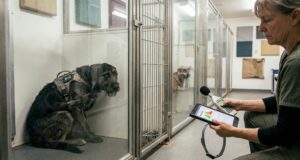
A senior dog may still enjoy a change of scenery, familiar human company, and time away from home. However, the physical and neurological changes associated with aging can make an ordinary Dog Boarding experience considerably more demanding. A facility that works well for a healthy three-year-old dog may be unsuitable for a twelve-year-old with stiff joints, reduced hearing, nighttime confusion, or a complicated medication schedule.
The challenge is not simply that older dogs move more slowly. Aging can change how they interpret unfamiliar environments, respond to noise, regulate body temperature, sleep, eliminate waste, and cope with separation from their owners. Several relatively minor inconveniences can become significant welfare concerns when they occur together.
Specialized Dog Boarding for senior dogs requires a geriatric approach. Staff must understand the difference between normal age-related changes and signs of illness, recognize when a dog needs additional assistance, and adjust the environment rather than expecting the animal to adapt to standard kennel routines.
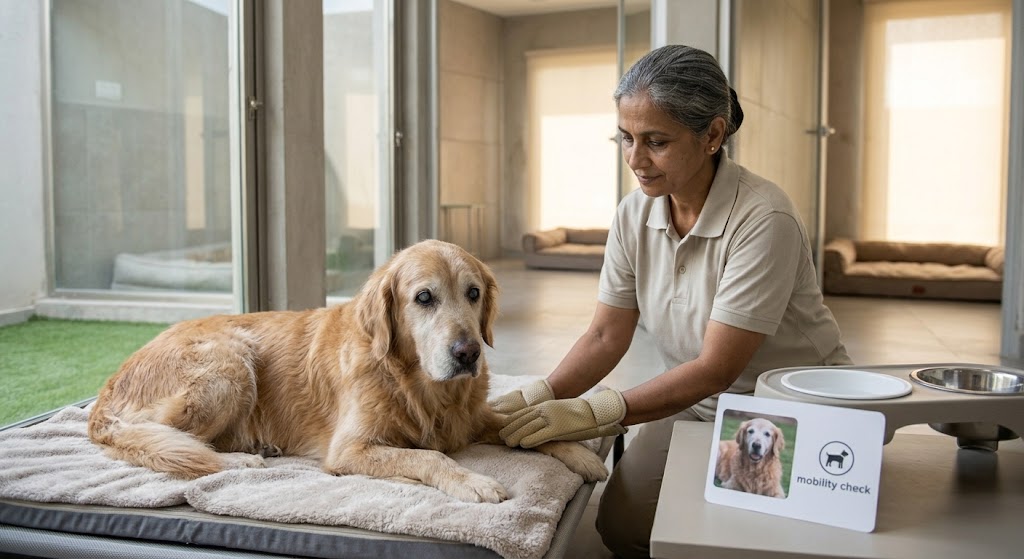
Why Aging Changes a Dog’s Boarding Requirements
Chronological age alone does not determine whether a dog needs specialized care. Some older dogs remain physically active and mentally alert, while others develop several age-related conditions that affect everyday functioning.
Breed, body size, genetics, previous injuries, body condition, dental health, chronic disease, and lifetime activity all influence how an individual dog ages. A large-breed dog may experience mobility limitations earlier than a smaller dog, although there is considerable variation between individuals.
Veterinary professionals increasingly consider functional ability rather than relying exclusively on an age threshold. An older dog that struggles to stand, becomes disoriented at night, or needs medication several times a day requires a different boarding arrangement from a similarly aged dog with no meaningful limitations.
Before accepting a senior dog, a responsible Dog Boarding facility should obtain information about:
- Current medical conditions and previous surgeries.
- Medication names, doses, administration times, and possible side effects.
- Walking ability, balance, and difficulty using stairs.
- Hearing and vision changes.
- Sleeping habits and nighttime behavior.
- Urination, bowel movements, and any recent accidents.
- Food preferences, appetite changes, and drinking habits.
- Sensitivity to heat, cold, noise, and unfamiliar surroundings.
These details help staff distinguish an individual dog’s normal behavior from a potentially concerning change during the stay.
Arthritis and Mobility Limitations: When Ordinary Kennel Design Becomes a Problem
Osteoarthritis is one of the most important considerations in senior Dog Boarding. It involves progressive changes in joints, including cartilage deterioration, inflammation, bone remodeling, and discomfort during movement.
Dogs with arthritis may not display obvious pain. Instead, owners might notice that their pet takes longer to stand, hesitates before climbing steps, walks more slowly, or avoids jumping onto furniture. Some dogs become irritable when touched around painful joints.
An unfamiliar boarding environment can make these limitations more difficult to manage. Slippery floors, elevated sleeping platforms, steep steps, and long distances between resting areas and outdoor exercise spaces may increase physical strain.
Why movement becomes more difficult
Arthritic joints can become particularly uncomfortable after periods of inactivity. A senior dog that sleeps for several hours may experience stiffness when getting up. Repeatedly moving between a sleeping area, feeding station, and outdoor enclosure can therefore become tiring.
The dog may also compensate for discomfort by placing more weight on healthier limbs. Over time, this can create additional strain elsewhere in the body.
Appropriate accommodation
A senior-friendly Dog Boarding facility should consider:
- Non-slip flooring in sleeping and walking areas.
- Comfortable orthopedic bedding with easy access.
- Ramps instead of stairs where appropriate.
- Food and water bowls positioned at comfortable heights.
- Shorter, controlled walks rather than demanding exercise sessions.
- Frequent opportunities to rest.
- Assistance when standing or moving, if needed.
Staff should never force an arthritic dog to participate in group play simply because other dogs are active. Gentle movement may be beneficial for some dogs, but activity should follow the veterinarian’s recommendations and the animal’s individual tolerance.
A sudden worsening of lameness, refusal to bear weight, severe pain, or inability to stand should not be dismissed as normal aging. These changes require veterinary assessment.
Canine Cognitive Dysfunction and Confusion in Boarding Environments
Canine Cognitive Dysfunction Syndrome (CCDS) is an age-related neurobehavioral condition associated with changes in memory, learning, awareness, and sleep-wake patterns. It is sometimes compared with aspects of human dementia, although the underlying conditions are not identical.
A familiar home provides important environmental cues. Older dogs may recognize the location of their bed, food bowls, doors, and usual toileting area without consciously searching for them. When these cues disappear during Dog Boarding, a dog with cognitive impairment may struggle to understand its surroundings.
The DISHAA framework is commonly used to describe behavioral changes associated with cognitive dysfunction:
- Disorientation: Becoming lost in familiar spaces or appearing confused.
- Interactions: Changes in social responses toward people or other animals.
- Sleep-wake cycle: Increased nighttime activity or daytime sleeping.
- House soiling: Urinating or defecating indoors despite previous training.
- Activity: Repetitive pacing, wandering, or reduced engagement.
- Anxiety: Increased fearfulness, restlessness, or difficulty settling.
Not every older dog displaying one of these behaviors has cognitive dysfunction. Pain, sensory loss, urinary disease, metabolic conditions, and other medical problems can produce similar signs.
Why unfamiliar surroundings can intensify confusion
A senior dog with cognitive changes may become unsettled when staff members change shifts, lighting patterns differ from home, or familiar sleeping arrangements are replaced. Repeatedly moving the dog between rooms can create additional uncertainty.
Nighttime can be especially difficult. Reduced environmental stimulation and poor visibility may contribute to disorientation in dogs that already experience altered sleep patterns.
Practical management in Dog Boarding
Facilities should provide a consistent sleeping location, predictable feeding times, familiar bedding, and calm interactions. Staff should avoid unnecessary rearrangement of the dog’s surroundings.
If the dog normally sleeps near its owner, a sudden transition to an isolated kennel may increase distress. A quieter accommodation area with appropriate human supervision may be more suitable.
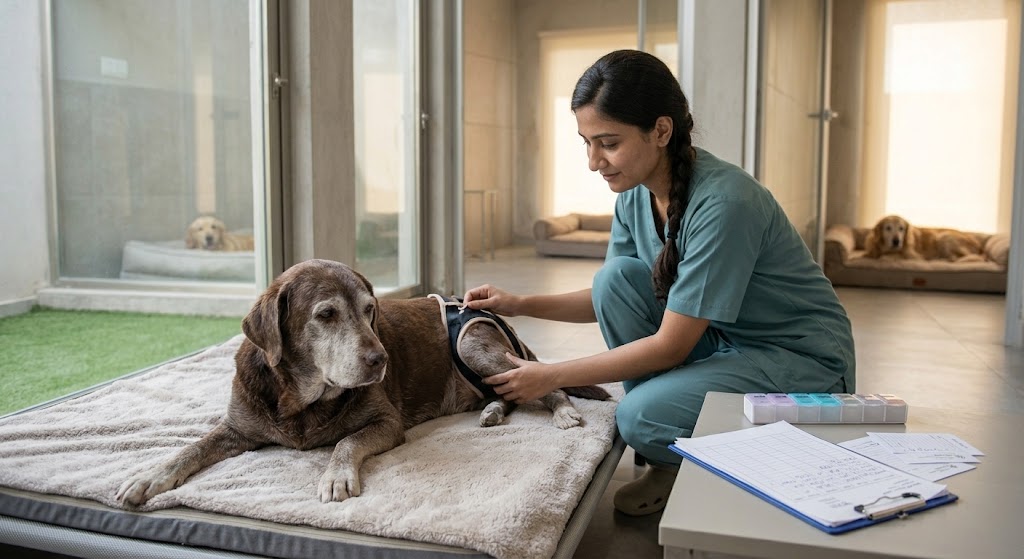
Owners should explain any existing nighttime routines, pacing episodes, vocalization, or confusion. A new episode of severe disorientation should prompt veterinary evaluation rather than being automatically attributed to old age.
Sensory Decline: Hearing and Vision Loss Require Environmental Adjustments
Senior dogs may experience gradual reductions in hearing and vision. These changes can influence their ability to navigate a boarding facility, recognize people, and respond to routine instructions.
Hearing loss
A dog with reduced hearing may fail to respond when staff call its name. It may also become startled when someone approaches from behind because it did not hear footsteps.
This can create misunderstandings. A dog that suddenly turns, barks, or reacts defensively may not be displaying aggression. It may simply have been surprised.
Staff should approach within the dog’s field of vision, use gentle visual signals, and avoid waking it through sudden physical contact.
Vision loss
Cataracts, retinal disease, and other age-related eye conditions can affect navigation. Some dogs manage familiar surroundings reasonably well but struggle when furniture, barriers, or sleeping arrangements change.
A boarding facility should maintain consistent pathways, provide adequate lighting, and avoid placing unfamiliar obstacles in frequently used areas.
For dogs with substantial visual impairment, staff should allow additional time to locate food, water, and outdoor access points. They should also supervise unfamiliar transitions carefully.
The combined effect
Hearing and vision loss can occur together. A dog that cannot clearly see an approaching person and cannot hear their footsteps may become especially vulnerable to sudden fear responses.
For this reason, senior Dog Boarding should not depend entirely on verbal commands. Calm movement, predictable handling, and clear environmental arrangements are often more effective.
Incontinence and Toileting: Protecting Dignity and Physical Health
Urinary or fecal accidents can become more common in older dogs, but they should never be treated as an unavoidable consequence of aging.
Urinary incontinence may result from weakened urinary sphincter function, neurological problems, anatomical abnormalities, or other medical conditions. Increased urination can also occur with kidney disease, diabetes, urinary tract infections, and certain medications.
Fecal accidents may be associated with reduced mobility, gastrointestinal disease, cognitive dysfunction, or difficulty reaching an outdoor area in time.
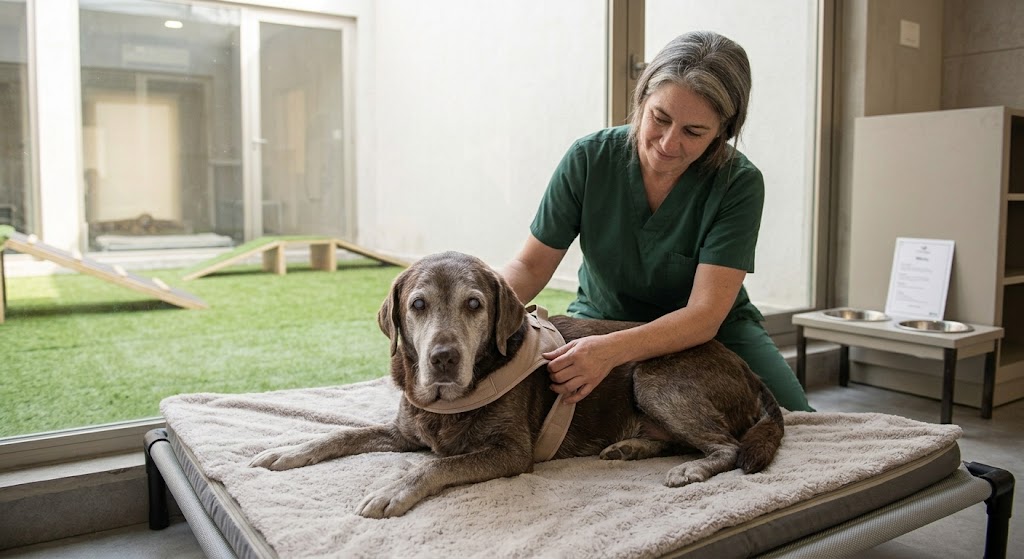
Why standard boarding schedules may fail
A healthy adult dog might comfortably follow a fixed toileting schedule. A senior dog with reduced bladder control or mobility problems may need more frequent opportunities.
If outdoor access is limited, the dog may become uncomfortable or repeatedly soil its sleeping area. Remaining in wet bedding can contribute to skin irritation and hygiene problems.
A responsible facility should establish a toileting plan based on the dog’s actual needs. This may include additional outdoor breaks, supervised assistance, washable bedding, and regular checks for moisture or soiling.
Medical warning signs
Staff should record changes in urination and bowel movements. Blood in urine, painful urination, repeated attempts to urinate, sudden loss of bladder control, or an inability to pass urine requires prompt veterinary attention.
Sudden incontinence should not be assumed to be behavioral. Identifying the underlying cause is essential to appropriate care.
Temperature Sensitivity and the Risks of Heat or Cold Exposure
Older dogs may have more difficulty coping with temperature changes, particularly when chronic illness, reduced body condition, limited mobility, or medication use is involved.
A dog with arthritis may become noticeably stiffer in cold conditions. Another senior dog with heart or respiratory disease may tolerate heat poorly because its body already has difficulty meeting increased physiological demands.
Temperature regulation also depends on factors such as coat type, body size, hydration, cardiovascular health, and the ability to move away from uncomfortable surroundings.
Heat-related concerns
Heat exposure can be dangerous because dogs rely heavily on panting to release body heat. Older dogs with airway disease, obesity, cardiac conditions, or reduced exercise tolerance may be particularly vulnerable.
A senior dog should never be left in a hot, poorly ventilated kennel or expected to remain active outdoors during extreme temperatures.
Facilities should provide:
- Climate-controlled indoor accommodation.
- Continuous access to clean drinking water.
- Shaded outdoor areas.
- Exercise schedules adjusted to weather conditions.
- Regular observation for excessive panting, weakness, and unusual restlessness.
Cold-weather considerations
Cold environments can worsen discomfort in dogs with joint disease or limited body fat. Senior dogs that spend much of the day resting may also struggle to maintain comfortable body temperature.
Warm, dry bedding and protection from drafts can help. However, heating equipment must be positioned safely to prevent burns or overheating.
Shivering, weakness, confusion, abnormal breathing, or unusual lethargy should be treated as potential medical warning signs rather than ordinary age-related behavior.
Medication Requirements: Accuracy Matters More Than Convenience
Many senior dogs receive medication for chronic conditions. These may include arthritis pain, heart disease, seizures, thyroid disorders, diabetes, or other long-term health problems.
For a boarding facility, administering medication is a clinical responsibility rather than a minor housekeeping task.
A missed dose, incorrect amount, unsuitable administration time, or misunderstanding about food requirements can affect the dog’s health. Some medications also require monitoring for adverse effects or interactions.
Establishing a medication protocol
Before the stay begins, owners should provide:
- The medication’s original packaging or clearly labeled container.
- The exact prescribed dose.
- The required administration time.
- Instructions concerning food or water.
- Known side effects and warning signs.
- The prescribing veterinarian’s contact information.
- Written instructions for missed doses or emergencies, where provided by the veterinarian.
Staff should maintain a medication administration record showing the date, time, dose, and name or initials of the person responsible.
Insulin-dependent diabetic dogs require particular attention to feeding and insulin schedules. Seizure medication should be administered consistently, and dogs receiving heart medication may require monitoring for changes in breathing, appetite, or energy.
Boarding personnel should not independently change medication doses, discontinue treatment, or substitute one medication for another. Questions about treatment should be referred to the prescribing veterinarian.
A facility should also be honest about its capabilities. If it cannot safely administer a particular treatment or provide the required monitoring, it should recommend a more suitable care arrangement.
Individualized Accommodation: Why One Senior Dog’s Needs May Differ From Another’s
Specialized Dog Boarding is not simply a quieter version of ordinary kennel accommodation. It requires a care plan built around the dog’s physical ability, medical requirements, emotional state, and established routine.
Two dogs of the same age may need entirely different arrangements. One may require a low-entry sleeping area because of arthritis, while another may need frequent toileting because of urinary problems. A third may remain physically healthy but become confused and anxious when separated from familiar surroundings.
Sleeping arrangements
A senior dog should have a clean, supportive sleeping surface that is easy to access. Bedding should be thick enough to improve comfort without creating an unstable surface that makes standing difficult.
Dogs with mobility limitations may need help getting into or out of their resting area. Staff should also monitor whether the dog can change position comfortably.
Feeding and hydration
Older dogs may have dental disease, reduced appetite, swallowing difficulties, or medical conditions requiring specific diets.
Owners should supply the dog’s regular food and provide precise feeding instructions. Sudden dietary changes can cause gastrointestinal problems, particularly when combined with the stress of an unfamiliar environment.
Water should remain accessible. Dogs with mobility or vision limitations may need bowls positioned where they can find and reach them easily.
Social interaction
Not every senior dog benefits from group play. Some enjoy calm companionship, while others become exhausted or frightened around energetic younger dogs.
Individual exercise, quiet human interaction, and short supervised introductions may be more appropriate.
The objective is not to eliminate stimulation but to provide activity that matches the dog’s physical and emotional capacity.
Recognizing When Senior Dog Boarding Is Not the Right Choice
A professional facility should be willing to refuse or modify a booking when the dog’s needs exceed its available resources.
Conventional Dog Boarding may be unsuitable for a senior dog that requires continuous medical observation, intensive nursing care, frequent emergency intervention, or specialized equipment unavailable at the facility.
Other concerns include:
- Unstable heart or respiratory disease.
- Poorly controlled diabetes.
- Recent surgery or serious injury.
- Severe mobility impairment requiring frequent lifting.
- Advanced cognitive dysfunction with persistent distress.
- Recurrent seizures without an established management plan.
- Medical conditions that may deteriorate rapidly without veterinary supervision.
In these situations, in-home care, a veterinary boarding service, or a specialized pet nursing arrangement may be safer.
The decision should be based on the dog’s actual medical and behavioral needs, not the owner’s expectations or the facility’s desire to accept another booking.
How Boarding Facilities Can Build a Senior Dog Care Plan
A structured care plan makes it easier for staff to provide consistent support, especially when multiple employees share responsibility.
A useful senior Dog Boarding plan should include the following areas.
Pre-arrival assessment: Collect medical history, medication instructions, mobility information, sensory limitations, dietary requirements, and emergency contacts.
Individual accommodation: Assign an appropriate sleeping area with suitable flooring, bedding, temperature control, and access to essential resources.
Daily health monitoring: Record appetite, water consumption, mobility, toileting, sleep, behavior, and any unusual physical symptoms.
Medication management: Follow written instructions and document every administered dose.
Exercise adjustment: Use short, controlled activities with sufficient rest periods.
Environmental consistency: Keep the dog’s sleeping area, feeding location, and walking routes predictable.
Owner communication: Report meaningful changes promptly rather than waiting until collection day.
Veterinary coordination: Maintain a clear procedure for contacting the owner and arranging veterinary assessment when necessary.
These measures also protect staff. Written records reduce misunderstandings during shift changes and make it easier to identify gradual deterioration.
Preparing a Senior Dog Before a Boarding Stay
Owners can reduce many boarding-related difficulties by preparing in advance.
A veterinary examination before a longer stay is particularly useful when the dog has chronic illness, recent behavioral changes, worsening mobility, or new medication requirements.
The owner should discuss whether the dog’s current condition is stable enough for boarding and whether any additional precautions are necessary.
Familiar bedding, regular food, written instructions, and a clearly label
ed medication supply can make the transition easier. A short trial stay may also help determine how the dog responds to the facility.
Owners should disclose problems that might seem embarrassing, including nighttime accidents, confusion, anxiety, or difficulty walking. Concealing these details prevents staff from providing appropriate care.
It is equally important to ask the facility how it handles medical emergencies, overnight supervision, medication administration, mobility assistance, and dogs that cannot participate in group activities.
Measuring the Quality of Senior Dog Boarding
The quality of senior Dog Boarding should be evaluated by more than cleanliness, appearance, or the number of activities offered.
A facility may have attractive accommodation but still lack the staff training or operational procedures required to support an elderly dog.
Owners should look for evidence that staff understand geriatric needs and can explain how individual care plans are implemented.
Useful questions include:
- Can the facility accommodate dogs with arthritis or limited mobility?
- How frequently are senior dogs offered toileting opportunities?
- Are medications documented after every administration?
- Is overnight monitoring available when required?
- Can dogs be separated from energetic group activities?
- What happens if a dog becomes confused or refuses food?
- Is there an established relationship with a nearby veterinary service?
- How quickly will owners be informed about a health concern?
A professional operator should answer these questions clearly and should not promise medical capabilities that its staff and facilities cannot provide.
Senior Dogs Need Care That Respects Their Changing Abilities
Aging does not automatically make Dog Boarding unsafe, nor does every older dog require intensive supervision. However, age-related changes can make ordinary boarding routines inappropriate when they fail to account for pain, sensory impairment, cognitive decline, incontinence, temperature sensitivity, and chronic medication needs.
The most effective approach is individualized care supported by veterinary guidance, careful observation, and consistent communication between owners and boarding staff.
A senior dog should not be expected to tolerate uncomfortable flooring, confusing surroundings, excessive exercise, or an inflexible toileting schedule simply because those arrangements work for younger animals.
Good senior Dog Boarding recognizes that comfort, predictability, dignity, and medical safety are essential parts of animal welfare. The best facility is not necessarily the one offering the most activities. It is the one capable of understanding what an aging dog can comfortably manage and adjusting its care accordingly.