A vaccination certificate can be an essential condition of admission to a Dog Boarding facility, but it does not tell the whole story about an animal’s health or its ability to safely share an environment with other dogs. Vaccines reduce the risk of several serious infectious diseases, yet their effectiveness depends on the dog’s age, health, previous vaccination history, timing of administration, and the specific pathogen involved.
For boarding operators, vaccination policies serve two purposes. They help protect individual dogs from preventable disease, and they reduce the likelihood that an infectious organism will spread through a facility. For owners, however, vaccination requirements can be confusing. Some vaccines are widely recommended for nearly all dogs, while others depend on geographic exposure, lifestyle, local disease prevalence, and the conditions in which a dog will be housed.
A sound Dog Boarding vaccination policy should therefore combine veterinary recommendations, applicable local requirements, accurate medical records, and practical infection-control procedures. Treating vaccination as a simple paperwork exercise creates a false sense of security. Treating it as part of a broader disease-prevention strategy provides a much stronger foundation for animal welfare.
Why Vaccination Is a Core Part of Dog Boarding Safety
Dogs in boarding facilities may encounter unfamiliar animals, shared walking areas, common surfaces, staff-handled equipment, and indoor environments where infectious organisms can circulate. Even when dogs are housed separately, transmission may occur through contaminated hands, footwear, bowls, bedding, equipment, or environmental surfaces.
The degree of risk varies. A facility with strong ventilation, controlled group interactions, effective sanitation, and appropriate isolation procedures will have a different exposure profile from a crowded facility with frequent contact between unfamiliar dogs.
Vaccination helps prepare a dog’s immune system to recognize particular disease-causing organisms. Depending on the vaccine, it may prevent infection, reduce the severity of illness, or decrease the likelihood of shedding and transmission. Protection is not identical for every vaccine or every dog.
A Dog Boarding vaccination policy should be designed around the diseases that pose meaningful risks to the animals using the facility, rather than requiring every available vaccine without considering individual circumstances.
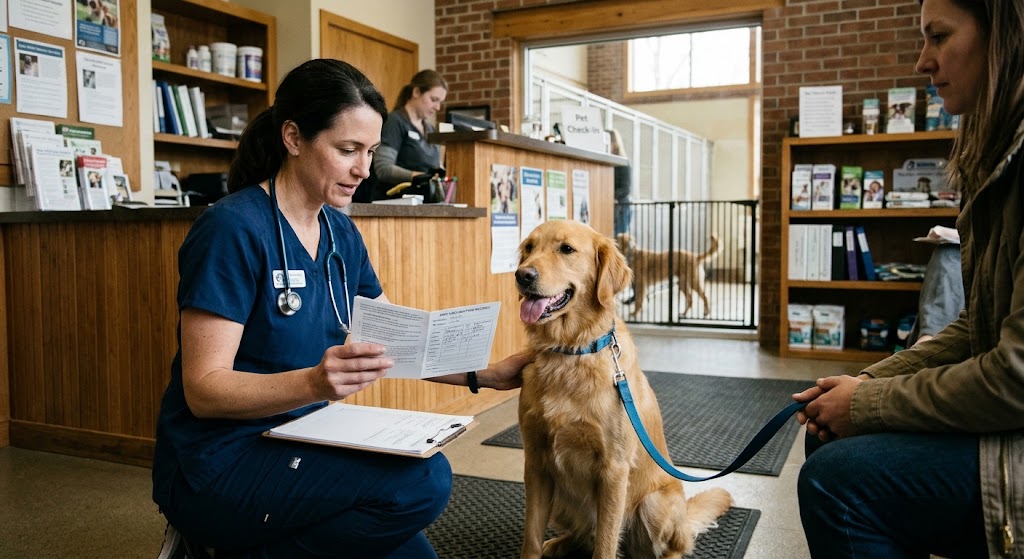
Understanding Core Vaccines and Their Importance
Core vaccines protect against diseases considered sufficiently serious, widespread, or consequential to justify vaccination for nearly all dogs, subject to individual veterinary assessment and applicable guidelines.
The precise classification and recommended schedule can vary by country and veterinary organization. In the United States, the American Animal Hospital Association (AAHA) and the World Small Animal Veterinary Association (WSAVA) provide widely used vaccination guidance.
Canine distemper
Canine distemper is a highly contagious viral disease that can affect the respiratory, gastrointestinal, and nervous systems. Infected dogs may develop fever, nasal and eye discharge, coughing, vomiting, diarrhea, muscle twitching, seizures, or other neurological abnormalities.
Distemper can be severe and potentially fatal, particularly in young or inadequately vaccinated dogs. Because it can spread through respiratory secretions and close contact, preventing exposure is an important consideration in Dog Boarding.
Canine parvovirus
Canine parvovirus is particularly dangerous because it can cause severe gastrointestinal disease, dehydration, and potentially life-threatening complications. Puppies and dogs without adequate immunity are especially vulnerable.
The virus spreads primarily through fecal contamination and can persist in the environment for extended periods. It may be carried on footwear, equipment, or other contaminated materials.
Vaccination is a major preventive measure, but it must be combined with appropriate cleaning, disinfection, isolation, and waste-management procedures.
Canine adenovirus
Vaccines targeting canine adenovirus type 2 provide protection against infectious canine hepatitis caused by adenovirus type 1 and contribute to protection against respiratory disease associated with adenovirus type 2.
Infectious canine hepatitis can affect the liver, kidneys, blood vessels, and other organs. Clinical severity varies, and young dogs may experience serious disease.
Rabies
Rabies is a fatal viral disease affecting the central nervous system. It can spread to humans and other mammals through the saliva of infected animals, commonly through bites.
Rabies vaccination is a core component of canine preventive healthcare and is also subject to legal requirements in many jurisdictions. A Dog Boarding facility should verify the applicable rabies vaccination rules in its operating location rather than relying on a general international schedule.
The required age, product, booster timing, and accepted documentation may be defined by local law.
Non-Core Vaccines: Why Boarding Exposure Changes the Risk Assessment
Non-core vaccines are recommended according to a dog’s individual lifestyle, geographic location, medical history, and likelihood of exposure. Some become particularly relevant when dogs enter shared environments.
A facility should not assume that every non-core vaccine is unnecessary simply because it is not universally required. Equally, it should not present every optional vaccine as mandatory without a clear veterinary or regulatory basis.
Bordetella bronchiseptica
Bordetella bronchiseptica is one of the organisms associated with canine infectious respiratory disease complex (CIRDC), commonly called kennel cough.
Dogs may develop a persistent cough, sneezing, nasal discharge, or reduced energy. Other viruses and bacteria can contribute to the same disease complex, meaning that Bordetella is not the only possible cause of respiratory illness in boarding environments.
Vaccination against Bordetella is frequently recommended for dogs with regular exposure to boarding facilities, daycare centers, grooming salons, and other group settings.
However, protection varies by vaccine type and does not eliminate all causes of kennel cough. A vaccinated dog may still develop respiratory symptoms after exposure to other infectious agents.
Canine influenza
Canine influenza viruses can cause respiratory illness and spread among dogs in environments where animals mix.
Vaccination may be recommended in areas experiencing outbreaks or where a dog’s exposure risk is elevated. Recommendations can depend on the circulating virus strains and the availability of appropriate vaccines.
Facilities should consult local veterinary professionals about whether canine influenza vaccination should be part of their admission policy.
Leptospirosis
Leptospirosis is a bacterial disease that can affect dogs and humans. Dogs may become infected through contact with urine from infected animals or environments contaminated by it, including standing water and wet soil.
The disease can cause kidney and liver injury and may become life-threatening.
Leptospirosis vaccination is increasingly recommended for many dogs in areas where exposure is possible. Its relevance to boarding depends on regional disease patterns, outdoor access, wildlife exposure, and environmental conditions.
Lyme disease
Lyme disease is transmitted through infected ticks. Vaccination may be appropriate for dogs living in or traveling to areas where Lyme disease is prevalent.
Its relevance to Dog Boarding is particularly important for facilities offering woodland walks, rural exercise, or access to tick-prone outdoor environments.
Vaccination does not replace tick prevention or regular tick checks. A complete protection strategy should address both immunization and parasite control.
Vaccination Timing: Why a Certificate Must Be Checked Carefully
A vaccination record does not automatically prove that a dog has developed adequate immunity. The date of administration, the dog’s age, the vaccine product, and its previous vaccination history all matter.
Puppy vaccination schedules
Puppies receive a series of core vaccinations because antibodies passed from their mothers can interfere with the immune response to early vaccines. These maternal antibodies gradually decline, but the timing varies between puppies.
Veterinary guidelines generally recommend repeated core vaccine doses at intervals during early puppyhood, with the final dose in the initial series given at or after 16 weeks of age. In some higher-risk situations, a veterinarian may recommend extending the series.
A puppy that has received one or two injections may not yet have reliable protection. Boarding facilities should therefore avoid treating an incomplete puppy vaccination record as equivalent to a completed primary series.
Adult dogs with established vaccination histories
Adult dogs with documented previous vaccinations may follow different booster intervals depending on the vaccine and local guidance. Some core modified-live vaccines provide longer-lasting immunity than one year, while other products require more frequent administration.
The facility should not impose a universal annual booster requirement without considering the product label, veterinary recommendations, and applicable law.
Allowing time for immune response
Vaccination generally requires time for the immune system to develop a protective response. The exact interval depends on the vaccine and the dog’s vaccination history.
For this reason, boarding operators should establish an admission policy that specifies how far in advance required vaccinations must be administered. The policy should be based on veterinary advice and product guidance, not an arbitrary number of days.
A dog vaccinated immediately before arrival may not yet have developed adequate protection.
What if a dog has missed a booster?
An overdue booster does not always mean that the dog must restart an entire vaccination series. The appropriate response depends on the vaccine, previous records, time elapsed, and veterinary assessment.
Owners should contact their veterinarian before boarding rather than arranging unnecessary repeat injections. The facility should explain its admission requirements clearly and allow sufficient time for owners to obtain professional advice.
Building a Reliable Vaccination Documentation Policy
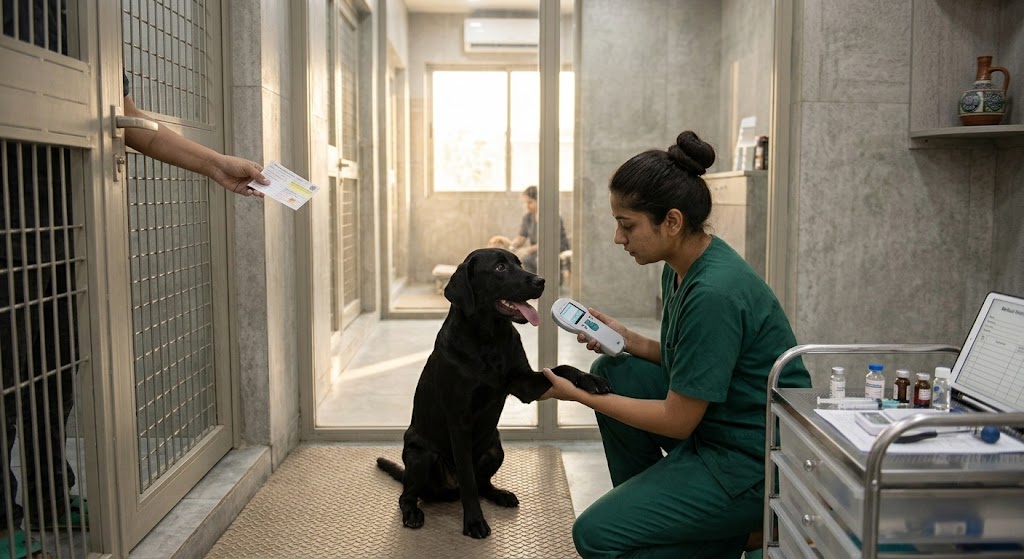
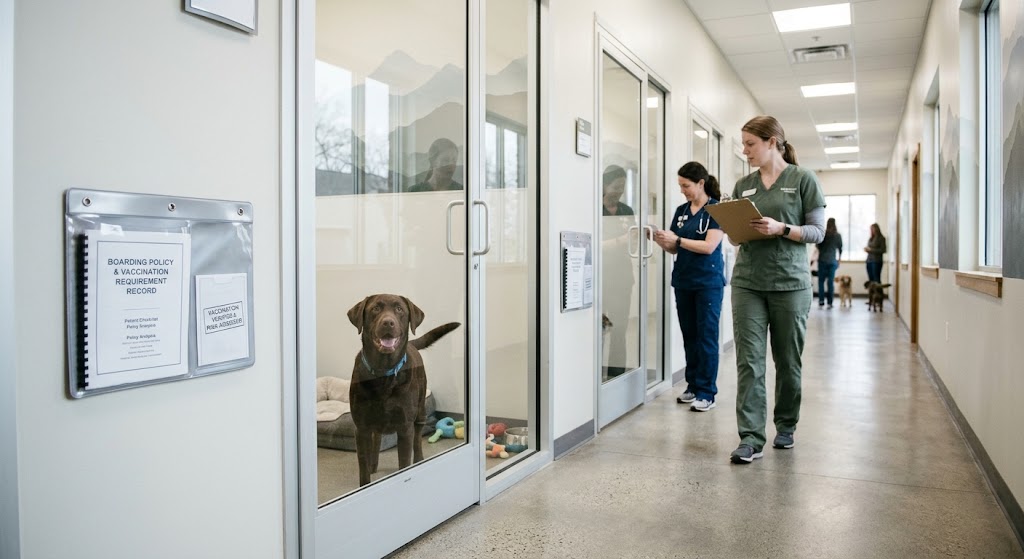
Vaccination records are an operational safety tool. They help boarding staff determine whether admission requirements have been met and provide useful information if an outbreak or suspected exposure occurs.
A verbal statement that a dog is vaccinated is not an adequate substitute for verifiable documentation.
What a vaccination record should contain
A useful record should identify:
- Dog’s name and identifying information.
- Owner’s contact details.
- Vaccine or disease covered.
- Date the vaccine was administered.
- Product name, where available.
- Manufacturer or batch details, where recorded by the clinic.
- Booster or next-due date, if specified.
- Veterinary clinic or administering professional.
- Veterinarian’s confirmation or other acceptable verification.
Facilities should check that the document belongs to the dog being admitted and that the dates are consistent with the stated vaccination history.
Digital records can make this process easier, particularly for facilities managing multiple bookings. However, staff should be able to retrieve the information when needed and maintain appropriate privacy protections.
Handling incomplete or unclear records
A record with missing dates, illegible product information, or an uncertain identity should be clarified before admission. Staff should contact the owner or veterinary clinic rather than guessing.
Facilities should have a written process for dogs whose vaccination history cannot be verified. Depending on the disease risk, local rules, and veterinary advice, the appropriate decision may be to postpone admission or request further documentation.
An exception should never be made simply because the owner is in a hurry or the facility has available space.
Local Laws and Regional Veterinary Requirements
Dog Boarding vaccination rules are not identical everywhere. Rabies requirements, licensing conditions, accepted vaccine records, and disease-control obligations can vary by country, state, province, municipality, and sometimes by the type of boarding operation.
A facility operating in the United States may need to consider state or local kennel regulations, rabies laws, and requirements imposed by licensing authorities. Other countries may have different legal frameworks, including rules related to animal importation, movement, or vaccination certificates.
The distinction between a legal requirement and a professional recommendation matters.
For example, rabies vaccination may be legally required in a particular jurisdiction, while Bordetella vaccination may be a facility admission policy based on respiratory disease risk rather than a statutory requirement.
A professional Dog Boarding operator should:
- Identify the laws applying to its specific location.
- Check requirements with the relevant animal-control, veterinary, or licensing authority.
- Consult a local veterinarian when developing its vaccine policy.
- Distinguish legal requirements from facility-specific recommendations.
- Review the policy when local disease risks or regulations change.
Facilities should not copy a vaccination policy from another region without checking whether it is appropriate locally. A policy designed for a high-risk boarding market may not be suitable for a different disease environment.
The Limitations of Vaccination: Why Immunized Dogs Can Still Become Ill
Vaccination substantially reduces the risk of many infectious diseases, but it does not create an invisible barrier around an animal. This distinction is central to responsible Dog Boarding management.
No vaccine covers every infectious organism
Canine infectious respiratory disease is a clear example. Several viruses and bacteria can cause similar respiratory symptoms. A dog vaccinated against Bordetella may still be exposed to canine influenza, parainfluenza, respiratory coronavirus, or other organisms.
Consequently, vaccination against one component of a disease complex cannot guarantee complete protection against the entire group.
Individual immune responses differ
Not every dog responds to vaccination in exactly the same way. Age, underlying illness, immune status, medication, and previous exposure may influence the response.
Some dogs may have an inadequate response despite receiving an appropriately administered vaccine. Others may have medical circumstances that require individualized veterinary advice.
Protection is not always immediate
A vaccine administered shortly before boarding may not have enough time to produce an effective immune response. Facilities should therefore establish clear timing requirements and communicate them before reservations are confirmed.
Vaccination may reduce severity rather than prevent all infection
Depending on the disease and vaccine, immunization may be more effective at preventing severe illness than preventing every infection or every instance of pathogen shedding.
A vaccinated dog can therefore still develop symptoms and, in some circumstances, contribute to transmission.
Environmental contamination remains possible
Some pathogens survive outside the host. Canine parvovirus, for example, can persist in contaminated environments and resist many ordinary cleaning products.
Vaccination cannot compensate for poor sanitation, contaminated equipment, inadequate isolation, or unsafe group-housing practices.
Dogs With Medical Conditions or Previous Vaccine Reactions
A strict admission policy should not ignore dogs with legitimate medical reasons for individualized vaccination decisions.
Some animals have chronic illnesses, immune-mediated conditions, or treatment histories that require a veterinarian to assess the risks and benefits of additional vaccination. Dogs receiving certain immunosuppressive medications may need particular consideration because their ability to respond to vaccines can be altered.
A previous adverse reaction should also be documented. Reactions can range from temporary soreness and tiredness to more serious allergic responses. A history of a significant reaction does not automatically mean that every future vaccine is inappropriate, but it does justify a veterinary review before further doses are administered.
How facilities should handle medical exemptions
A boarding operator should never independently declare a dog medically exempt from vaccination. That decision belongs to the veterinarian familiar with the animal’s health and the relevant disease risks.
When an exemption is proposed, the facility should request appropriate written veterinary documentation. It should then determine whether admission is legally permitted and whether the dog’s presence creates an unacceptable risk for other animals.
A medical exemption does not mean that the dog is protected. It means that vaccination may not be advisable under the circumstances. Additional precautions, alternative accommodation, or postponement may be necessary.
Facilities should avoid placing medically vulnerable dogs in group play or shared spaces when exposure risks cannot be adequately controlled. If safe accommodation cannot be provided, recommending veterinary boarding or another suitable care arrangement may be the more responsible decision.
Adverse Reactions and Post-Vaccination Monitoring
Most dogs tolerate routine vaccination without serious complications. Temporary effects can include mild tiredness, tenderness at the injection site, or a short-lived reduction in appetite.
More concerning reactions may include facial swelling, widespread hives, repeated vomiting, breathing difficulty, weakness, or collapse. These signs require immediate veterinary attention, particularly when they develop shortly after vaccination.
Boarding facilities should ask owners whether their dog has recently received a vaccine and whether any reaction occurred. This information is useful when interpreting changes in appetite, energy, or behavior after admission.
Vaccination should ideally be arranged with enough time before a boarding stay to observe the dog’s response and allow any necessary veterinary follow-up. Scheduling several new vaccines immediately before a stressful transition may also make it harder to distinguish vaccine-related effects from unrelated illness or adjustment stress.
Staff should not attempt to treat a suspected vaccine reaction with human medication or leftover veterinary drugs. The appropriate response is to contact a veterinarian and follow professional instructions.
Vaccination Must Work Alongside Infection-Control Procedures
A well-vaccinated boarding population can still experience an outbreak if infection-control procedures are weak. Vaccination should therefore be one layer of a broader prevention system.
Admission health screening
Every dog should receive a basic health check at arrival. Staff should look for coughing, nasal discharge, vomiting, diarrhea, skin lesions, unusual lethargy, and other signs of illness.
A dog that appears sick should not automatically enter shared accommodation because its vaccination records are complete. The facility should assess the symptoms and seek veterinary guidance.
Isolation and separation
Facilities need an appropriate procedure for separating dogs with suspected infectious diseases. Isolation areas should be physically and operationally distinct from ordinary housing, with dedicated supplies and controlled staff movement.
A symptomatic dog should not continue participating in group activities while the facility waits to see whether symptoms disappear.
Cleaning and disinfection
Cleaning removes dirt and organic material, while disinfection uses a suitable product to reduce targeted microorganisms. These are related but different processes.
Staff should follow the disinfectant manufacturer’s instructions, including the required dilution and contact time. Products should be selected according to the pathogens of concern. A disinfectant effective against ordinary bacteria may not be effective against a resistant virus such as canine parvovirus.
Food and water bowls, bedding, toys, floors, transport equipment, and frequently touched surfaces should be included in written cleaning procedures.
Ventilation and group management
Respiratory diseases can spread through droplets, close contact, and contaminated objects. Appropriate ventilation, avoiding overcrowding, and limiting unnecessary mixing between unfamiliar dogs can reduce opportunities for transmission.
Group activities should be based on health status, temperament, size, and compatibility. A vaccination certificate should never be treated as permission to mix every dog indiscriminately.
Developing a Practical Dog Boarding Vaccination Policy
A written policy helps ensure that admission decisions are consistent rather than depending on which employee happens to be working.
A professional policy should identify the vaccines required for admission, the vaccines recommended according to exposure risk, accepted documentation, timing rules, and procedures for medical exemptions.
Example vaccination policy framework
- Core vaccination verificationCheck documented protection against the core diseases recommended by the relevant veterinary guidelines and required by local law.
- Risk-based non-core assessmentConsider Bordetella, canine influenza, leptospirosis, Lyme disease, and other regionally relevant vaccines according to exposure and veterinary advice.
- Timing reviewConfirm that vaccinations were administered sufficiently in advance and that puppy vaccination schedules are appropriately completed.
- Record verificationConfirm the dog’s identity, vaccine details, dates, and veterinary source.
- Medical exception procedureRefer exemption requests to a veterinarian and assess whether safe admission is possible.
- Arrival health assessmentScreen for symptoms even when vaccination requirements have been met.
- Ongoing reviewUpdate the policy when veterinary guidance, local regulations, or regional disease risks change.
This framework should be adapted to the facility’s location, services, and veterinary advice. It is not a universal legal standard or a substitute for local regulatory review.
Responsibilities of Dog Owners Before Admission
Owners play an important role in preventing disease during Dog Boarding. Waiting until the day of departure to check vaccination status can create unnecessary problems.
A practical preparation process includes:
- Reviewing vaccination records with the dog’s veterinarian.
- Confirming which vaccines the boarding facility requires.
- Scheduling any recommended vaccination sufficiently in advance.
- Providing accurate medical history and previous reaction information.
- Disclosing recent coughing, vomiting, diarrhea, or other symptoms.
- Bringing the required veterinary documentation.
- Asking how the facility handles outbreaks and suspected illness.
Owners should not conceal symptoms to avoid cancellation or admission delays. A dog that is already showing signs of infectious disease may expose other animals, and early veterinary assessment may be important for its own health.
They should also understand that a facility may postpone admission even when a dog’s vaccines are current if the animal appears unwell.
Evaluating Whether a Facility’s Vaccination Policy Is Credible
A professional Dog Boarding facility should be able to explain its vaccination policy without relying on vague statements such as “all dogs must be fully vaccinated.”
Owners should ask which vaccines are required, why they are required, how far in advance they must be administered, and whether the facility follows local veterinary recommendations.
Other useful questions include:
- Does the facility verify vaccination certificates before admission?
- Are puppies subject to additional age-related restrictions?
- How are dogs with medical exemptions assessed?
- What happens when an admitted dog develops coughing or diarrhea?
- Is there a designated isolation area?
- Does the facility have a relationship with a local veterinary practice?
- How are vaccination and health records stored and updated?
- Are staff trained to recognize common infectious disease symptoms?
A credible operator should be transparent about its limitations. For example, a facility without overnight veterinary supervision should not imply that it provides continuous medical monitoring.
The quality of a vaccination policy is reflected not only in the documents collected but also in how consistently the facility applies its disease-prevention procedures.
Vaccination Is Essential, but Responsible Dog Boarding Requires More
Vaccination requirements are a fundamental part of responsible Dog Boarding because they help protect dogs against serious infectious diseases and reduce preventable health risks in shared environments. Core vaccines establish an important foundation, while non-core vaccines address additional risks associated with geography, lifestyle, and exposure to other animals.
However, vaccination records cannot guarantee that a dog is free from infection or incapable of transmitting disease. Protection depends on timing, immune response, vaccine coverage, and the individual animal’s health. Some dogs also require medically supervised exceptions rather than a standard vaccination schedule.
The strongest boarding policies combine veterinary guidance, accurate documentation, local regulatory compliance, admission health screening, appropriate sanitation, ventilation, and effective isolation procedures.
Ultimately, a vaccination certificate should be treated as one part of a dog’s health assessment, not as proof that every disease risk has been eliminated. A safe boarding environment is created when immunization and everyday infection-control practices work together to protect every dog in the facility.